

Water dripping through your ceiling has a way of stopping everything else in its tracks.
Whether it’s a steady trickle from a bathroom above, a sudden burst from a failed appliance, or an unexpected flood from the unit upstairs, your first instinct is usually the same: “Who’s responsible for this?”
While that’s an important question, it’s not the first one that needs answering.
When you’re dealing with water damage from an upstairs neighbour in Ontario, the priority is stopping further damage, protecting your belongings, and documenting everything. Questions about liability, insurance, and deductibles can be sorted out once the immediate emergency is under control.
The good news is that Ontario’s condominium framework and insurance system are often more protective than many condo owners realize. Understanding how they work can help you make informed decisions during an already stressful situation.
Key Takeaways
- Document all damage immediately with photos and videos before attempting cleanup.
- Notify the upstairs unit, property manager, and condominium corporation as soon as possible.
- Protect belongings and contain active water where it is safe to do so.
- Ontario condominium corporations are generally required under the Condominium Act to maintain insurance covering major perils, including water escape.
- If negligence contributed to the loss, the condominium corporation may be able to charge its insurance deductible back to the responsible unit owner.
- Your condo insurance policy may cover interior improvements, personal belongings, and additional living expenses.
- Water damage should be professionally assessed as quickly as possible to reduce the risk of mould growth and secondary damage.
- Responsibility often depends on the source of the water and the condominium corporation’s governing documents.
What to do immediately
Act fast. When it comes to condo water damage from above, the first hour can make a meaningful difference.
Start by documenting everything before moving furniture, drying surfaces, or removing damaged materials. Take photographs and videos of every affected area, including ceilings, walls, flooring, personal belongings, active leaks, and visible staining.
Next, protect your possessions. Move electronics, furniture, important documents, and valuables away from affected areas if it is safe to do so.
If water is actively entering the unit, use buckets, towels, or other temporary measures to contain it. Think of it as damage control rather than a permanent solution.
Notify the upstairs resident immediately if possible. A running appliance, overflowing fixture, or plumbing failure may still be contributing to the problem. At the same time, contact your property manager or condominium corporation so the issue can be investigated.
Avoid attempting electrical work or shutting off building systems unless you are qualified to do so. Water and electricity are a dangerous combination.
Finally, contact your insurance provider to report the incident and begin the claims process.
Who is responsible under Ontario condo law?
The short answer is: it depends.
Responsibility for water damage from an upstairs neighbour in Ontario often depends on where the water originated and what caused the loss.
Under Section 99 of Ontario’s Condominium Act, condominium corporations are generally required to maintain insurance covering major perils, including water escape. This means the corporation’s insurance is often the primary responder when significant water damage affects units or common elements.
If the source originates from a common element, such as shared plumbing infrastructure or the building envelope, responsibility often falls within the corporation’s insurance framework.
If the source originates from the unit above, such as a leaking dishwasher, washing machine failure, or unattended overflowing tub, the corporation’s insurance may still respond initially. However, that does not necessarily mean the upstairs owner avoids financial responsibility.
Ontario condominium declarations often permit deductible chargebacks where negligence is involved.
For example, if a resident ignores a known plumbing issue and it later causes extensive water damage, the condominium corporation may seek recovery of its deductible from that unit owner. Depending on the building, deductibles can range from several thousand dollars to tens of thousands of dollars.
Section 89 of the Condominium Act also generally requires condominium corporations to repair units and common elements after damage occurs, subject to the corporation’s declaration and standard unit definitions.
Because every condominium’s governing documents differ, this information should be considered general guidance rather than legal advice.
Your own condo insurance (HO-6) and what it covers
Many condo owners assume the corporation’s insurance covers everything.
It doesn’t.
Your personal condo insurance policy, often referred to as an HO-6 policy, plays an important role after a water loss.
Most policies may provide coverage for:
- Interior improvements and upgrades
- Personal belongings damaged by water
- Temporary living expenses if the unit becomes uninhabitable
- Personal liability protection
- Deductible assessment coverage, depending on endorsements
Imagine you’ve renovated your kitchen with upgraded cabinetry and flooring. Even if the corporation’s insurance responds to the overall loss, your policy may be needed to address improvements that fall outside the building’s standard unit definition.
If you’ve experienced an upstairs unit flooding your apartment, contacting your broker early can help clarify what coverages may apply and what documentation they will require.
When to call a water damage restoration company
The answer is simple: immediately.
One of the biggest mistakes property owners make is waiting until responsibility has been determined before starting mitigation efforts.
Water doesn’t care whose fault it is.
Moisture can spread through drywall, insulation, flooring, cabinetry, and structural materials surprisingly quickly. Under the right conditions, mould growth may begin developing within 24 to 48 hours. While this timeline is a risk guideline rather than a guarantee, it highlights why early intervention matters.
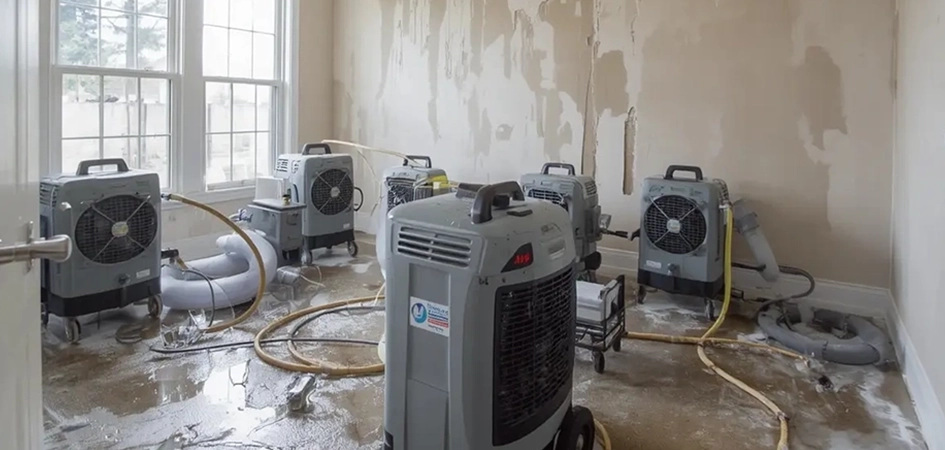
Professional restoration companies use specialized equipment and assessment methods such as moisture mapping, structural drying, and ongoing monitoring to identify hidden moisture before it becomes a larger problem.
The goal isn’t simply drying what you can see. It’s finding what you can’t see.
Property owners dealing with water damage from upstairs neighbours in Ontario can benefit from professional assessment before damage spreads further. Property Worx provides emergency restoration services that include water extraction, drying, monitoring, and documentation to support both restoration and insurance requirements.
Our structured restoration process helps ensure damage is documented properly while mitigation and drying efforts begin as quickly as possible.
Can you sue your upstairs neighbour?
Potentially, yes.
If negligence contributed to the water loss, the upstairs resident may be legally responsible for some or all of the resulting damages.
Examples could include:
- Leaving a bathtub running unattended
- Ignoring a known plumbing issue
- Failing to maintain appliances
- Delaying repairs after discovering a leak
However, litigation is often not the first solution.
In many Ontario condo water damage cases, the insurance process, condominium corporation involvement, and deductible chargeback mechanisms resolve matters without the need for court proceedings.
Think of it this way: insurance and condominium governance structures are designed to address most incidents before lawyers become necessary.
If liability remains disputed or damages exceed available insurance coverage, legal advice may be appropriate.
FAQ
How quickly does mould grow after water damage?
Mould can begin developing within 24 to 48 hours when moisture, suitable temperatures, and organic materials are present. Growth rates vary depending on environmental conditions, which is why we recommend prompt drying and mitigation.
My landlord hasn’t responded. What should I do?
If you are a tenant, document all communication attempts and notify the property manager if applicable. Ontario landlords have obligations regarding property maintenance and repairs. Additional options may be available through the Landlord and Tenant Board if issues remain unresolved.
What if the upstairs owner denies responsibility?
In many situations, determining fault is not required before restoration begins. The condominium corporation, insurers, and adjusters typically investigate the cause while repairs and mitigation proceed.
Should I call Property Worx even if insurance hasn’t been confirmed?
Yes. Waiting for insurance decisions before addressing active water damage can increase the extent of the loss. Professional documentation, moisture assessment, and mitigation can begin while coverage investigations are underway. Property Worx regularly works with insurers and property managers throughout Ontario to support the claims process.
Stop the Water First, Sort Out Responsibility Second
If your upstairs neighbour caused water damage in your condo, the most important step is taking action immediately. Document everything, notify the appropriate parties, protect your belongings, and arrange professional mitigation as soon as possible.
Questions about water damage liability in Ontario condos, deductible chargebacks, and insurance responsibility are important, but they shouldn’t delay efforts to prevent further damage.
Property Worx provides emergency water damage restoration, documentation support, moisture mapping, structural drying, and insurance coordination throughout Ontario. If water is actively entering your unit or damage has already occurred, Property Worx can help you take the next step. For immediate assistance, contact Property Worx and speak with an experienced restoration professional.
