

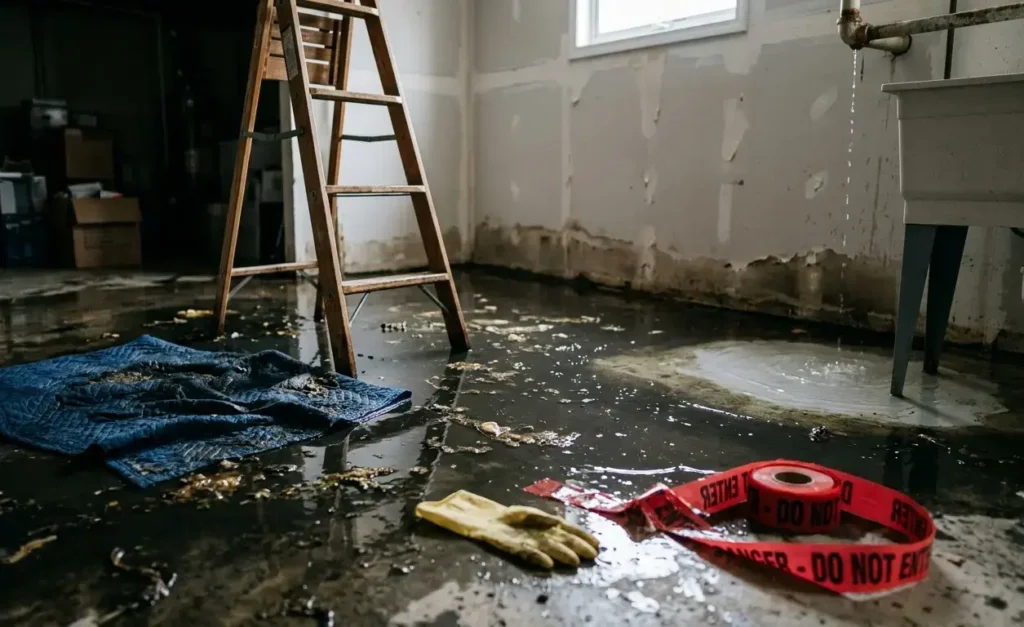
Picture this. You are a homeowner in Toronto, drinking your morning coffee, and you head downstairs to the basement to grab something from storage. Suddenly, your foot hits something cold, wet, and incredibly unwelcome. Have you ever walked down into your basement only to be greeted by an unwanted indoor pool? It is a nightmare scenario for any property manager, landlord, or homeowner. Panic sets in. You might be tempted to grab a mop and a bucket to tackle the mess right away. But hold your horses! Not all water damage is created equal.
While some water sources are relatively clean and straightforward to mop up, others can contain a toxic cocktail of dangerous bacteria and harmful toxins. To keep your property and your family safe, you need to understand the different levels of contamination. The water damage categories explained below will highlight exactly why Category 3 water, commonly known as black water, poses serious health risks that require immediate professional cleanup. Trying to handle this yourself is like playing Russian roulette with your health. Let us dive deep into the murky waters of property damage to understand the true dangers of black water flooding.
Key Takeaways
- Not All Floods Are the Same: Water damage is classified into three distinct categories based on contamination levels.
- Grey Water is Deceptive: While it might look relatively clear, grey water from appliances can contain chemical and biological contaminants that can quickly become hazardous.
- Black Water is a Biohazard: Category 3 water contains raw sewage, bacteria, and severe pathogens. It is never safe to handle without professional protective gear.
- Time is of the Essence: Standing water degrades structural materials rapidly and invites aggressive mould growth in as little as 24 to 48 hours.
- Professional Help is Mandatory: Dealing with contaminated water requires specialized training, heavy-duty equipment, and strict adherence to IICRC standards to ensure your home is truly safe.
Understanding Water Damage Categories
Before you dip a toe (literally or figuratively) into your flooded living space, you need to know exactly what you are dealing with. The restoration industry classifies water damage into three specific categories based on the source of the water and its potential to cause health problems. Think of this as a traffic light system for water hazards.
Category 1 – Clean Water
This is your “green light” scenario, relatively speaking. Category 1 water damage stems from a sanitary source. This typically includes water from supply pipes, a broken plumbing line carrying drinking water, a bathtub that overflowed before anyone got in, or a malfunctioning refrigerator water line. It has minimal contamination and poses no substantial risk if ingested or touched. However, do not let your guard down! If left untreated, Category 1 water can easily degrade into a more dangerous category as it mixes with soils, dust, and building materials.
Category 2 – Grey Water
Now we are entering the “yellow light” zone. Category 2 water damage, commonly referred to as grey water, contains a significant degree of chemical, biological, or physical contaminants. This is moderately contaminated water from appliances like washing machines, bathroom sinks, and dishwashers. It might contain soap scum, grease, food particles, or mild biological matter. Contact with this water can cause illness or discomfort. Grey water damage cleanup requires careful handling, as this water can provide a perfect breeding ground for microorganisms if left stagnant.
Category 3 – Black Water
This is the ultimate “red light.” Stop right where you are. Category 3 water damage is grossly contaminated and poses extreme health and safety risks. This highly contaminated water contains sewage, bacteria, fungi, and harmful pathogens. We are talking about water that comes from beyond the toilet trap, overflowing municipal sewer lines, or contaminated floodwater from rivers and heavy storms sweeping through Toronto streets. Contact with Category 3 water can cause severe illness or even death.
Grey Water vs Black Water – Key Differences
It is easy to get confused when staring at a puddle in your home. The debate between black water vs grey water often comes down to the source of the water and the level of invisible dangers it may contain. Let us break down exactly what separates these two troublesome intruders.
Common Sources of Grey Water
Grey water usually comes from plumbing fixtures and appliances used for cleaning. Common culprits include washing machines that overflow during a laundry cycle, bathtubs filled with soapy water, and dishwashers that decide to leak mid-wash. Waterbed leaks and aquarium overflows also fall into this category. While you definitely do not want to drink it, it does not immediately threaten your life to stand in it momentarily.
Common Sources of Black Water
Black water sources are the ones that make you want to call for backup immediately. This includes sewage backups, septic system failures, and any floodwater entering homes from the outside. Because outside floodwater travels across lawns, roads, and industrial areas, it picks up fertilizers, animal waste, oil, and whatever else is on the ground. When a sewage backup strikes, it pushes raw, untreated human waste directly into your living spaces.
Contamination Levels and Health Risks
The primary difference lies in the unseen threats. With grey water, the contamination levels are moderate. You might face some skin irritation or an upset stomach if exposed. Black water contamination, on the other hand, is a full-blown biological nightmare. It carries a heavy load of dangerous microorganisms and toxins. We are talking about E. coli, Salmonella, Hepatitis, and various parasites. Breathing in aerosolized particles from black water, or letting it come into contact with an open scrape on your skin, can send you straight to the emergency room.
Also Read: Water Damage Restoration Checklist for Homeowners
Why Category 3 Water Damage Is So Dangerous
When Category 3 water enters your property, it is not just a structural problem. It is an immediate environmental hazard. You might be wondering why industry professionals treat a sewage spill like a radioactive event. Here is the reality check.
Biohazard Contamination
First and foremost, Category 3 water is defined by its biohazard contamination. Black water often contains bacteria, viruses, and parasites that can cause serious illness. These are living organisms actively reproducing in the water pooling in your basement. Every hour that the water sits there, the bacterial count multiplies exponentially. Pests and rodents are also attracted to this type of environment, bringing additional diseases with them.
Rapid Structural Contamination
Water is notoriously lazy; it always finds the easiest path down and out. Contaminated water quickly spreads through flooring, drywall, insulation, and furniture. Because black water is loaded with organic matter, it aggressively degrades these building materials. Porous materials act like giant sponges, soaking up not just moisture but also toxins and waste. Once drywall or carpet padding absorbs Category 3 water, it is fundamentally compromised and cannot be saved.
Mould and Secondary Damage
If the bacteria were not enough to worry about, the secondary damage will certainly keep you up at night. Black water significantly increases the risk of mould growth and structural deterioration. Mould spores are everywhere in the air, and they only need moisture and a food source to thrive. The organic waste in black water is an all-you-can-eat buffet for mould. Within just two days, aggressive black mould can start spreading behind your walls, compromising the indoor air quality of your entire Toronto home and requiring extensive, costly remediation.
Why DIY Cleanup Is Unsafe for Black Water
We know that Torontonians are a resilient and handy bunch. Your first instinct might be to grab some heavy-duty trash bags and a bottle of bleach. But let’s be crystal clear: you should never attempt to handle Category 3 water removal on your own. Homeowners must avoid attempting to clean Category 3 water damage themselves for a multitude of critical safety reasons.
Exposure to harmful pathogens is virtually guaranteed without proper Personal Protective Equipment (PPE). A simple splash to the face or inhaling the fumes can cause severe respiratory and gastrointestinal infections. Furthermore, incomplete sanitation with household cleaners is incredibly common in DIY attempts. Bleach might temporarily improve the smell, but it does not penetrate porous surfaces deeply enough to eradicate the bacteria hiding inside. Finally, DIY efforts almost always miss the hidden contamination inside structural materials. You might dry the surface of the floor, but the subfloor beneath it will slowly rot, breed mould, and emit foul odours for years to come.
Also Read: Sewage Backup Cleanup: Health Risks & Restoration Process
Professional Category 3 Water Cleanup Process
Because of the severe risks involved, professional water damage restoration follows a very strict, scientifically backed protocol. When Property Worx arrives at your property, we follow rigorous IICRC standards (Institute of Inspection, Cleaning and Restoration Certification) to ensure your home is returned to a safe, habitable condition.
Water Extraction
The first order of business is getting the hazardous water out of your house. Industrial pumps remove contaminated water quickly and safely, directing it into specialized containment tanks for proper legal disposal. This is a far cry from a wet-dry vacuum you might rent at a local hardware store. Our heavy-duty extraction methods minimize the time the water has to soak into your foundation.
Removal of Contaminated Materials
Once the standing water is gone, the demolition phase begins. Severely affected materials such as drywall, carpets, baseboards, and insulation are safely removed. In a Category 3 situation, porous materials simply cannot be salvaged because the biohazards penetrate too deeply. Our certified technicians carefully cut away and dispose of these contaminated items, bagging them securely to prevent cross-contamination of the rest of your home.
Disinfection and Sanitization
With the wet, ruined materials out of the way, we wage war on the microscopic threats. Professional antimicrobial treatments eliminate bacteria and pathogens on all remaining structural elements, like concrete foundations and wooden wall studs. Disinfection and sanitization are carried out using commercial-grade, eco-friendly chemicals that neutralize biohazards, restoring the area to a medically safe baseline.
Drying and Dehumidification
Just because the area looks dry does not mean the job is done. Moisture hides deep within the framework of your property. Specialized equipment prevents mould growth and further damage. We use high-volume air movers and commercial-grade dehumidifiers to draw the remaining moisture from the air, and the structural drying process begins. We continuously monitor the moisture levels with specialized thermal imaging and hygrometers until your home’s humidity is perfectly balanced.
When to Call Professional Water Damage Restoration Experts
How do you know when it is time to put down the mop and pick up the phone? The answer is simple: when in doubt, call the experts. There are, however, a few surefire signs that dictate an immediate professional response.
If you are dealing with any size sewage backup, do not hesitate to call. Toilet water mixed with waste backing up into your shower drains or basement floor drains requires an immediate call. Similarly, if you have floodwater entering the home from a breached river, overwhelmed city sewer grates, or heavy rainfall, you are dealing with Category 3 black water. Strong odours or visible contamination, such as dark, murky water with floating debris, are huge red flags. Even if the water seems clean initially, any large-scale water damage that you cannot completely dry within 24 hours warrants a professional team. Expert sewage backup cleanup protects both your valuable property investment and, more importantly, your family’s long-term health.
Also Read: 10 Common Emergency Restoration Myths (Water, Fire & Mould) Debunked
Why Property Worx Is the Trusted Choice for Category 3 Water Damage Cleanup
When disaster strikes your Toronto property, you need a team that acts fast, knows the science of restoration, and treats your home with the utmost respect. Property Worx is the leading expert in the Greater Toronto Area for handling catastrophic water events. Our team is composed of certified restoration technicians who have undergone rigorous training to safely handle hazardous environments.
We understand that water emergencies do not happen on a 9-to-5 schedule, which is why our emergency response services are available around the clock. By applying advanced drying and sanitation equipment, we ensure that no lingering moisture or bacteria are left behind to haunt you later. We do not just clean up the mess; we offer complete restoration support to guide you through the stressful insurance claims process and rebuild your home to its former glory. If you are concerned about the condition of your property after a leak, we strongly encourage you to request a Free Water Damage Inspection so we can accurately assess the risk level.
Navigating the Storm: Securing Your Home After Severe Water Damage
To wrap things up, managing a flood or a backup in your home is never a walk in the park. As we have covered, understanding the difference between a simple clean water leak and a hazardous black water emergency is the key to keeping your family safe. Category 3 water brings a host of invisible dangers, from aggressive pathogens to rapid structural decay and toxic mould. While DIY fixes are tempting for small spills, the severe biohazards present in sewage and floodwaters require the heavy-duty extraction, meticulous sanitization, and structural drying that only a professional team can provide. Let’s make sure your property remains a safe haven, not a science experiment!
Schedule Emergency Water Damage Restoration Today
Protect your home and your health by addressing contaminated water damage quickly with professional help from Property Worx.
