

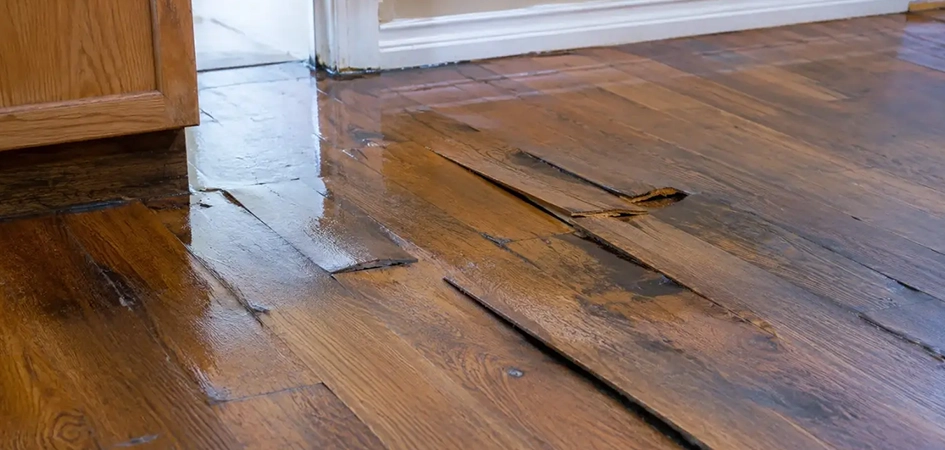
Picture this: you wake up in your Toronto home, head to the kitchen for your morning coffee, and step right into a puddle. A dishwasher leaks overnight, or perhaps a burst pipe sends water cascading across the floorboards. Maybe a heavy storm in the GTA left standing water pooling in the living room. Panic sets in pretty fast, right? You might be asking yourself if your beautiful floors are ruined forever.
The honest answer depends on a few critical factors. How long did the water sit? What type of water caused the damage? Is the subfloor soaking wet beneath the surface? We also have to look at how much the wood planks have warped, whether mould is starting to grow, and whether your flooring is solid or engineered hardwood. Hardwood floor water damage is stressful, but understanding your options helps you make the right choice for your home.
Key Takeaways
- Fast action saves hardwood floors: With fast water extraction and professional drying, hardwood floors can sometimes be saved. The quicker you act, the better your chances.
- Contamination matters: If the water came from a clean source, your odds of salvaging the floor increase. Exposure to sewage or heavily contaminated floodwater usually requires removal.
- Wood type makes a difference: Solid hardwood is generally more forgiving and can often be dried and refinished. Engineered hardwood can be harder to save because its layers tend to peel apart when wet.
- Testing is crucial: Moisture testing is the best way to know the right next step. Surface dryness means nothing if the subfloor below is still holding moisture.
Can Water-Damaged Hardwood Floors Be Saved?
Sometimes, yes! If you are wondering, can water-damaged hardwood floors be saved? The answer is not a simple yes or no. Salvageability depends heavily on water exposure time, the water category, the current condition of the floorboards, subfloor moisture levels, and the risk of mould. Most importantly, it depends on how quickly a professional hardwood floor drying process begins. We never make guarantees before inspecting the site, but catching the problem early dramatically improves the odds of a successful hardwood floor restoration.
Hardwood Floor Repair vs Replacement: Quick Comparison
Deciding between hardwood floor repair vs replacement can feel overwhelming. Here is a handy comparison to help you understand the typical outcomes across different scenarios.
| Scenario | Repair/Restore Likely | Replacement Likely |
| Exposure Time | Brief exposure, fast cleanup | Standing water left for days |
| Water Source | Clean tap water or appliance leak | Sewage backup or floodwater |
| Damage Extent | Minor cupping, localized damage | Severe buckling, widespread warping |
| Wood Condition | Solid hardwood, finish damage only | Delamination, rotten boards |
| Mould & Subfloor | No visible mould, stable subfloor | Visible mould, soft or swollen subfloor |
How Water Damages Hardwood Floors
Wood is naturally porous like a sponge. Hardwood absorbs moisture through seams, the wood grain, board edges, and especially the subfloor. When water penetrates these areas, the wood swells. This swelling leads to several physical changes. You might notice cupping hardwood floors, where the edges of the boards rise higher than the centre. Alternatively, crowning of hardwood floors occurs when the centre swells higher than the edges.
If the pressure is severe, it leads to buckled hardwood floors, where the boards literally lift away from the subfloor. Beyond the visible warping and raised seams, you have to worry about loose planks, hidden subfloor water damage, rot, and the very real risk of mould growth.
Signs Hardwood Floors May Be Salvageable
Not all water-damaged hardwood floors are doomed. There are several positive signs that repair may be possible. If you catch an appliance leak and hardwood floor damage early and perform quick water removal, you are in a good position. Minor cupping and localized damage can often be fixed. If there is no visible mould, no musty odour, and the subfloor feels stable underfoot, restoration is very possible. Exposure to clean water that caused only finish damage, without major structural distortion, also means the floors might just need professional drying and refinishing.
Signs Hardwood Floors May Need Replacement
When do you need to replace water-damaged hardwood floors? Some signs leave no room for debate. Severe buckling and widespread warping usually indicate that the wood’s structural integrity is gone. Persistent musty odours, dark stains, black stains, or visible mould growth below the floor are major red flags. If the hardwood was exposed to blackwater or sewage contamination, health and safety protocols require removal. Furthermore, a soft or swollen subfloor, rotten boards, loose planks, or delamination in engineered hardwood indicate that replacement is the only safe route.
If you suspect damage has been lingering unnoticed for a while, you should read our guide on Signs of Hidden Water Damage in Older Homes & What to Do.
What to Do Immediately After Water Hits Hardwood Floors
If you find yourself dealing with wet floors, your immediate actions matter. First, stop the water source if it is safe to do so. Turn off the main valve if a pipe bursts. Next, remove standing water as quickly as possible using towels or a wet vacuum. Move any soaked rugs and furniture off the wet wood to prevent dye transfer and further moisture trapping. Document the damage by taking clear photos for your insurance claim. Always avoid unsafe electrical areas. If water has spread under the boards or across a large area, call a professional for emergency water damage restoration right away.
What Not to Do After Hardwood Floor Water Damage
Knowing what not to do is just as critical. Do not wait for the floor to dry on its own. Air drying alone leaves hidden moisture trapped in the subfloor. Do not attempt to sand the floors too early, as sanding wet wood will permanently ruin the floorboards. Do not use high heat to bake the floors dry, as extreme temperature changes cause cracking. Do not ignore musty smells, and do not cover wet areas with rugs, hoping the problem will vanish. Most importantly, do not assume surface dryness means the subfloor is safe.
Solid Hardwood vs Engineered Hardwood Water Damage
When assessing damage, the type of flooring changes the game plan entirely. Solid hardwood consists of thick, solid pieces of wood. Because of this, it can sometimes be dried, sanded, and refinished if the moisture damage is not severe.
Engineered hardwood water damage is a different story. Engineered boards are made of multiple thin layers of wood glued together. When these boards get wet, the adhesives break down. The layers separate, peel, bubble, swell, and delaminate. Once engineered hardwood delaminates, it usually needs to be replaced. Just to clarify, laminate is entirely different from hardwood and reacts differently to water, almost always requiring immediate replacement when soaked.
Why Water Category and Contamination Matter
Not all water is created equal. The industry categorizes water into three types based on contamination levels. Category 1 water is clean water from a broken pipe or overflowing sink. Category 2 water contains some contaminants, like water from a washing machine. Category 3 water is heavily contaminated blackwater, such as sewage backups, foundation seepage, or flood-damaged hardwood floors from storm runoff.
Because wood is porous, it absorbs whatever is in the water. Hardwood exposed to sewage, floodwater, or storm runoff often needs complete removal to protect your health. If you are curious about how natural floods differ from plumbing leaks, check out our article on Flood Damage vs. Water Damage: What’s the Real Difference?.
How Professionals Decide Whether Hardwood Floors Can Be Saved
How do we figure out whether you need hardwood floor water-damage repair or a total replacement? The assessment process is thorough. We start with source identification and a strict review of water categories. Then we use advanced tools, such as an infrared moisture-detection camera and a moisture meter, to perform detailed moisture mapping. We conduct subfloor checks and inspect the area for mould and odour.
Based on this structural assessment, we provide a restoration recommendation. This plan may include drying only, drying and refinishing, spot board replacement, partial floor replacement, full floor replacement, subfloor repair, mould remediation, or reconstruction.
Professional Hardwood Floor Water Restoration Process
If the floors can be saved, the professional hardwood floor drying services kick into high gear. We start with emergency water extraction. Hardwood floors need to be treated immediately to halt the damage. Next, we deploy advanced drying and dehumidification equipment. Depending on the situation, we use drying mats or specialized floor drying systems designed to pull moisture directly up through the wood planks, supported by commercial air movers and dehumidifiers. We conduct daily moisture monitoring to ensure the structural drying is on track. Cleaning and sanitization happen alongside limited board replacement if a few planks are too far gone. We only recommend sanding and floor refinishing after full drying is confirmed. If the damage is too severe, we pivot to safe removal and reconstruction.
Cost and Insurance Considerations for Hardwood Floor Water Damage
The financial side of water-damaged wood floors is always a major concern for property owners. Several cost factors influence the final bill, including the size of the affected area, the water exposure time, the flooring type, and the subfloor condition. The water category and the need for mould remediation also affect costs, as does whether you need refinishing to match existing floors or a full replacement. As for insurance, coverage depends heavily on your specific policy, the exact cause of the damage, and the insurer’s assessment. Thorough documentation is your best friend during this process.
When to Call Property Worx
Do not wait to see if the problem fixes itself. You should call Property Worx immediately if water is still spreading or if your hardwood is visibly cupping or buckling. Call us if there is standing water, if the floor feels soft under your feet, or if you notice a musty smell in the room. If mould is visible, or if you suspect the subfloor may be wet, we need to inspect it. You must also call right away if the water came from sewage or flooding, if multiple rooms are affected, or if you need proper insurance documentation to file your claim smoothly.
The Property Worx Approach
At Property Worx, we help Toronto homeowners and property managers assess water-damaged hardwood floors to determine whether restoration or replacement is the right option for their specific situation. Our comprehensive approach includes a rapid emergency response, aggressive water extraction, and a meticulous moisture inspection. We handle source identification, provide targeted hardwood floor drying support, and conduct a thorough mould risk assessment and a deep subfloor inspection.
When you need emergency water damage restoration, our team arrives ready to mitigate the loss. We pride ourselves on offering professional water damage restoration that prioritizes your safety and your property’s value. Because lingering moisture invites fungal growth, we also specialize in mould removal and remediation. As your trusted partner for property restoration services, we handle the entire process, from initial cleanup to final repairs and reconstruction as needed. We even provide detailed, photo-rich insurance claim documentation to make your life easier during a stressful time.
Common Misconceptions About Hardwood Floor Water Damage
A major misconception is that if the floor looks dry on top, it is perfectly safe. Hidden moisture in the subfloor can rot your home from the inside out.
Another myth is that cupped floors always need to be replaced. Often, professional wet hardwood floor drying can flatten them back out over time.
Many people think sanding should happen right away to smooth out warped hardwood floors. Sanding wet wood actually causes permanent damage.
Some homeowners believe only major floods damage hardwood. In reality, a slow, hidden appliance leak can cause far more rot over time.
Lastly, it is a dangerous myth that mould can simply be cleaned from any hardwood floor. If spores have penetrated deeply into porous wood, cleaning the surface will not resolve hardwood floor mould after water damage. For more tips on keeping spores at bay, read How to Prevent Mould After Water Damage Restoration.
How to Prevent Hardwood Floor Water Damage
The best cure is prevention. Start by cleaning spills immediately so moisture does not seep into the seams between boards. Always remove wet rugs from hardwood surfaces. Routinely inspect your plumbing and appliances, especially the water lines of your dishwasher and refrigerator. Controlling indoor humidity with a dehumidifier helps prevent seasonal moisture damage to hardwood floors. Keep up with home maintenance by checking the roof and gutters, and improving exterior drainage to keep water flowing away from your foundation. For ultimate peace of mind, consider using smart leak detection devices near major appliances.
Why Choose Property Worx?
When disaster strikes your floors, you need a team that knows exactly what they are doing. We bring local emergency restoration expertise directly to your doorstep in Toronto and the GTA. With our 24/7 emergency response, we are there when you need us most, providing rapid water extraction and drying support. We use advanced moisture-detection equipment to find water you cannot even see. From mould remediation support and meticulous insurance claim documentation to full-service cleanup and reconstruction, we offer reliable residential and commercial restoration services that get your property back to normal.
Don’t Guess: Get Your Hardwood Floors Professionally Checked
Dealing with a flooded living room or a sneaky kitchen leak is enough to ruin anyone’s week. However, water damage to hardwood floors does not automatically mean you have to rip everything out and start over. While swift action is the key to saving your floorboards, waiting too long drastically reduces the chances of a successful rescue. Do not play guessing games with your home’s structural integrity or your family’s health. Contact Property Worx today for a fast inspection, emergency water extraction, professional drying, and expert restoration support. Let us handle the heavy lifting so you can get back to enjoying your home.
