

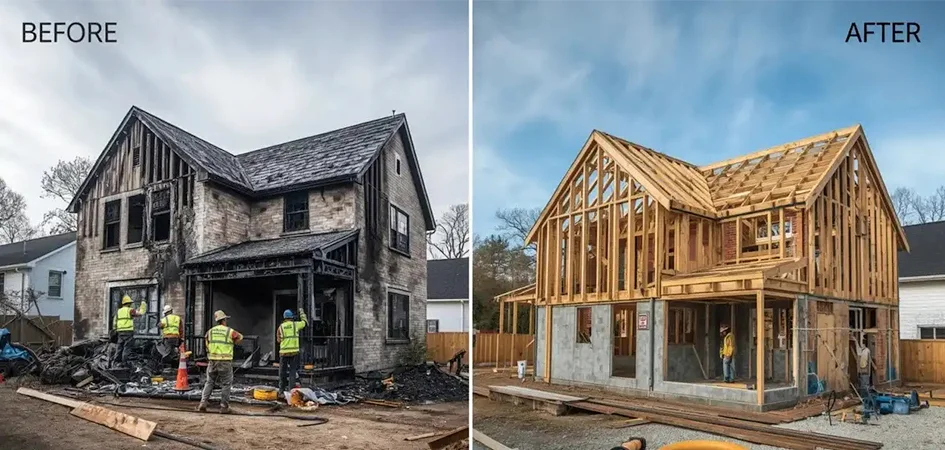
Standing on the sidewalk watching fire trucks pull away from your home is an experience no one wants to endure. The smell of smoke lingers in the cool Toronto air, and an overwhelming sense of uncertainty settles in. Where do you even begin? Your mind is likely racing with questions, but the biggest dilemma staring you down is usually this: Should you restore the home, or is it better to start over entirely?
Both options have their own advantages, and there is no universal right answer. The best path forward depends on the extent of the structural damage, your budget, your timeline, and ultimately, your family’s safety. Making the wrong call can drain your finances and leave you dealing with hidden issues for years. That is exactly why we created this guide. We want to help you cut through the confusion and make informed, financially sound decisions. Here at Property Worx, we have guided countless Greater Toronto Area families through this exact nightmare. We understand the stress you are carrying right now, and we are here to help you get your life back to normal.
Key Takeaways Before We Dive In
- Safety dictates the path: A structural engineer must assess foundation integrity and load-bearing walls before making any decisions.
- Smoke and water are stealthy: Often, the water damage from firefighting efforts and soot contamination dictate a rebuild even if the fire itself was contained.
- Insurance plays a massive role: Understanding the difference between replacement cost and actual cash value is vital to your strategy.
- Local regulations matter: Ontario building codes and Toronto reconstruction permits will heavily influence both your timeline and your budget.
Understanding the Difference Between Renovating and Rebuilding After a Fire
Before we get into the weeds of costs and timelines, we need to clarify what these two paths actually look like in the real world. The terms are often used interchangeably, but the processes are entirely different.
What Renovation Means After Fire Damage
When we talk about repairing fire damage through renovation, we are looking at salvaging the safe portions of your home. This process focuses on restoring interiors and structural components that remain structurally sound. A large part of this involves extensive smoke and soot remediation, odour treatment, and selective replacement of damaged materials. If a kitchen fire scorched your cabinets and ceiling but left the framing intact, renovation is usually the goal.
What Rebuilding Involves
Rebuilding after fire damage means starting from a clean slate. This involves partial or total demolition of the affected areas. Instead of patching things up, your contractor is reconstructing major structural systems. In severe cases, this means tearing the property down to the foundation and starting fresh from the framing. Rebuilding is a massive undertaking, but it provides peace of mind knowing no hidden damage was left behind.
Which Option Is More Common?
The path you take usually comes down to severity. Partial fires, such as an isolated bedroom or garage fire, almost always require renovation. Total-loss fires, in which the roof has collapsed or structural integrity is compromised, require a rebuild. It is a spectrum, and professional property restoration specialists use specific metrics to determine where your home falls on it.
Key Factors That Determine Whether You Should Renovate or Rebuild
Choosing between fire damage restoration vs rebuilding is not just a matter of preference. The property itself usually dictates the answer based on several critical factors.
Extent of Structural Damage
This is the big one. Fire eats through wood and compromises metal. We always bring in a structural engineer to look at the bones of the house. We need to evaluate the foundation, framing, roof systems, and load-bearing walls. If the thermal damage has weakened the core support structure of your home, trying to patch it up is like putting a Band-Aid on a broken leg.
Smoke, Soot, and Hidden Contamination
Fire damage is not just what you can see. Smoke damage restoration is often the most complex part of the job. Soot contamination finds its way into every crack and crevice. We have to look closely at HVAC contamination, toxic residue, and deep odour penetration. If the smoke has deeply infiltrated the porous materials of the home, stripping it down to the studs might be the only way to ensure safe indoor air quality.
Water Damage From Firefighting Efforts
It is a cruel irony that the water used to save your house can cause just as much damage as the flames. Secondary water damage from high-pressure hoses quickly seeps into floors and walls. If left untreated for even a few days, the risk of mould growth skyrockets. Sometimes, the combination of fire and severe water saturation makes rebuilding the safer bet.
Age and Condition of the Home
Toronto boasts some beautiful, historic neighbourhoods. But older building systems come with their own headaches. If your home has outdated wiring or plumbing, a fire might be the catalyst that forces you to update. Attempting a fire-damaged home repair on a house that already needed major foundational or electrical work often turns into a money pit.
Local Building Codes and Permit Requirements
You cannot just rebuild things exactly as they were 50 years ago. Current Ontario building codes demand compliance. Mandatory upgrades to insulation, electrical systems, and structural supports can drive up rebuilding compliance costs. Navigating demolition permits and reconstruction permits takes time, and these municipal regulations will heavily influence your final decision.
When Renovating After Fire Damage Makes More Sense
Sometimes, the stars align, and your home is entirely salvageable. Here is when keeping the original structure is the smartest move.
Minor to Moderate Structural Damage
If the flames were put out quickly and the structural fire damage restoration only requires replacing a few joists or sections of drywall, renovating is a no-brainer. You save time, money, and materials.
Limited Smoke and Soot Penetration
When a fire is contained, the smoke is often contained as well. If testing shows that the soot contamination is localized and can be effectively cleaned by IICRC-certified restoration professionals, a full teardown is unnecessary.
Lower Overall Repair Costs
Renovating is typically cheaper than rebuilding, provided there are no hidden surprises. If the house fire renovation cost comes in significantly under your insurance policy limits, a targeted repair process keeps your budget healthy.
Faster Return to the Property
Let’s face it, living in a hotel or temporary rental gets old fast. If you are asking yourself, Is It Safe to Stay in a House After a Fire?, the answer is usually no. However, a renovation takes months, whereas a rebuild can take well over a year. Renovation gets you back into your own bed much sooner.
Emotional Value of Preserving the Home
Houses hold memories. Maybe you brought your kids home from the hospital to this house, or you spent years perfecting the backyard. Preserving that emotional connection has real value. If it is safe to restore a fire-damaged house, keeping those memories intact is a beautiful thing.
When Rebuilding Is the Better Long-Term Solution
There are times when holding onto the past does more harm than good. Sometimes, you just have to bite the bullet and start over.
Severe Structural Instability
If the roof has caved in or the foundation has cracked from intense heat, the building is no longer safe. Trying to fix severe instability is dangerous and often more expensive than starting fresh.
Extensive Smoke and Toxic Contamination
When plastics, synthetic carpets, and electronics burn, they release toxic chemicals. If these toxins have permeated the entire structure, no amount of scrubbing will make the indoor air quality safe again. A rebuild guarantees you are breathing clean air.
Total Loss Fires
In scenarios where the fire swept through the majority of the property, the decision is made for you. A total loss requires fire damage, demolition, and a complete ground-up reconstruction.
Repeated Water and Mould Damage
If the property sat soaked for weeks while waiting for insurance approvals, the mould growth might be catastrophic. When water damage compromises the framing on a massive scale, rebuilding prevents recurring mould issues down the road.
Cost of Repairs Exceeds Property Value
Contractors often talk about the “50% rule.” If the cost to renovate exceeds half the value of the property, it usually makes more financial sense to rebuild entirely. You get a brand-new, modern home that will likely appraise for much more than a patched-up older house.
Cost Comparison: Renovating vs Rebuilding After Fire Damage
Money talks, and after a fire, you need to know exactly where every dollar is going.
Average Renovation Costs After a Fire
Renovation costs vary wildly depending on the room. A contained kitchen fire might cost between $15,000 and $40,000 to restore. If you are dealing with whole-home smoke remediation and minor structural fixes, you might be looking at $50,000 to $100,000.
Average Rebuilding Costs
Rebuilding after fire damage in the GTA is a different ballgame. Given current labour and material rates, you can expect to pay anywhere from $250 to $400 per square foot for reconstruction. For a standard 2,000-square-foot home, costs easily push $500,000 to $800,000.
Hidden Costs Homeowners Often Miss
Do not let the initial quotes fool you. There are always hidden fees creeping around the corner.
| Expense Type | Description | Impact on Budget |
| Permit Fees | Toronto reconstruction permits and zoning applications. | Thousands of dollars, plus time delays. |
| Temporary Housing | Renting a comparable home while yours is under construction. | $2,000 to $4,000+ monthly. |
| Demolition | Tearing down the dangerous structure and disposing of hazardous waste safely. | $10,000 to $30,000 depending on size and access. |
| Code Upgrades | Bringing older electrical or plumbing systems up to current standards. | Highly variable, often $15,000+. |
Which Option Is More Cost-Effective Long-Term?
Renovating saves money today. Rebuilding creates value for tomorrow. If an older home needs constant upkeep anyway, investing the insurance payout into a brand-new, energy-efficient rebuild often yields a much higher return on investment over the next twenty years.
Timeline Comparison: How Long Does Each Option Take?
Time is a luxury you rarely have when your life has been turned upside down. Setting realistic expectations early will save you a lot of frustration.
Typical Fire Restoration Timeline
A targeted fire damage repair process usually takes anywhere from 4 to 12 weeks. This includes drying out the water, cleaning the soot, passing air quality tests, and putting the drywall and paint back together.
Typical Reconstruction Timeline
Patience is a virtue here. A full fire damage reconstruction can take 8 to 16 months. Designing the new home, laying the foundation, framing, and finishing require significant coordinated effort. That Delay Projects
We wish we could tell you that everything always runs on schedule. In reality, you need to brace for delays regarding permits, municipal inspections, slow insurance approvals, and ongoing global material shortages.
Insurance Considerations Homeowners Need To Understand
Dealing with the aftermath of a fire is tough. Dealing with insurance paperwork while processing a fire is exhausting.
What Fire Insurance Usually Covers
Most standard homeowner policies in Canada cover dwelling repairs, personal property replacement, and “loss of use” expenses, such as temporary rental costs.
Replacement Cost vs Actual Cash Value
This distinction is massive. “Replacement Cost” pays to rebuild your home with similar materials at today’s prices. “Actual Cash Value” only pays you what the house was worth right before the fire, minus depreciation. You want replacement cost coverage if you plan on rebuilding.
How Insurance Adjusters Assess Damage
An insurance adjuster works for the insurance company. They will visit the site, document the damage, and determine a payout based on their findings. It is in your best interest to have your own emergency fire cleanup services team present to point out hidden damage the adjuster might miss.
When Insurance May Recommend Rebuilding
If the adjuster runs the numbers and realizes that structural fire damage restoration will cost 80% of what a new build would cost, they will often authorize a total rebuild.
Tips for Maximizing Your Claim
Document absolutely everything. If you are wondering how to handle the first 24 hours, read our guide on What to Do Immediately After a House Fire: A Step-by-Step Homeowner Checklist. Take hundreds of photos, list all damaged items, and hire professional restoration contractors who know how to speak the insurance company’s language.
Hidden Risks of Trying To Save a Severely Damaged Property
Trying to cut corners and salvage a home that truly needs demolition is a recipe for disaster.
Lingering Smoke Odours
Smoke particles are microscopic. They bury themselves deep into the wood framing. If not treated with specialized fire mitigation services, your home will smell like a campfire every time it gets humid outside.
Structural Weaknesses
Heat changes the molecular structure of wood and steel. A joist that looks fine might snap under a heavy Canadian snowfall six months later.
Air Quality and Health Concerns
Breathing in residual soot can lead to respiratory issues over time. Proper indoor air quality testing is not a step you can afford to skip.
Electrical and Plumbing Failures
Wires melt, and pipes warp inside walls that you cannot see. Saving a wall just to have an electrical fire start a year later defeats the whole purpose.
Long-Term Mould Risks
Water gets trapped behind baseboards and under floor joists. If you do not properly dry out the home, you will be trading a fire problem for a massive toxic mould problem.
Professional Fire Damage Assessment Process Explained
You cannot diagnose structural integrity by just standing in the driveway. A professional assessment relies on a rigorous, scientific approach.
Initial Emergency Inspection
The moment the fire department hands the property back, our team steps in to secure the site. We board up windows, tarp the roof, and assess immediate collapse hazards.
Structural Safety Evaluation
We bring in the heavy hitters. A structural engineer will inspect the foundation and load-bearing walls to determine whether the building is safe for the cleanup crew to enter.
Smoke and Air Quality Testing
We use specialized chemical sponges and air monitors to map out exactly how far the soot contamination has spread throughout the HVAC system and drywall.
Moisture Detection and Water Damage Inspection
Using thermal imaging cameras and moisture meters, we track down every drop of water hiding behind the walls to create a targeted drying plan.
Restoration Plan and Cost Estimate
Once we gather the data, we present you with a clear, honest breakdown. We outline what can be saved, what must be demolished, and the total cost of the fire damage repair process.
How To Make the Right Decision for Your Property
You are standing at a crossroads. Taking a deep breath and looking at the facts will guide you to the right path.
Questions Homeowners Should Ask
Ask yourself the hard questions: Is the structure truly safe? What will my insurance actually cover? What is the long-term value of the home in this neighbourhood? How long can our family reasonably stay in a new location?
Working With Restoration Experts and Contractors
Do not hire a standard kitchen renovator for this. You need contractors trained specifically in fire restoration services who understand the chemistry of smoke and the physics of heat damage.
Getting Multiple Assessments Before Deciding
If your gut tells you something is wrong with the first assessment, get a second opinion. This is your home and your financial future on the line.
Why Property Worx Is the Trusted Choice for Fire Damage Restoration
When your world feels chaotic, you need a team that brings calm, order, and deep expertise to the table. Property Worx stands ready with rapid emergency response capabilities across the Greater Toronto Area. Our IICRC-certified restoration professionals do not just clean up messes; we manage the entire process from that first stressful night through to the day you walk back through your newly painted front door. We utilize advanced smoke and water remediation equipment to tackle the toughest hidden damage, ensuring your family’s health is never compromised. We also sit down with you to navigate the confusing insurance claim process, fighting to ensure you get the coverage you deserve.
Whether you need safe demolition coordination or customer-focused restoration planning, we are the trusted fire damage restoration company you can rely on. As the premier emergency property restoration experts Toronto residents count on, we take the burden off your shoulders so you can focus on healing.
Request a free fire damage assessment and get expert fire damage restoration help today!
Moving Forward: Your Path to Recovery After a Fire
A house fire tests your resilience in ways few other events can. Deciding whether to repair fire damage through renovation or take the leap into a full rebuild is arguably the hardest part of the journey. As we have covered, this decision hinges on the integrity of your foundation, the extent of hidden water and smoke damage, and the specifics of your insurance policy. While renovating is faster and preserves the bones of a home you love, severe structural damage or widespread contamination often dictates that rebuilding is the safer, smarter long-term investment. Whatever path your home requires, remember that you do not have to walk it alone. Lean on the experts, ask the tough questions, and prioritize your family’s long-term safety above all else.
