

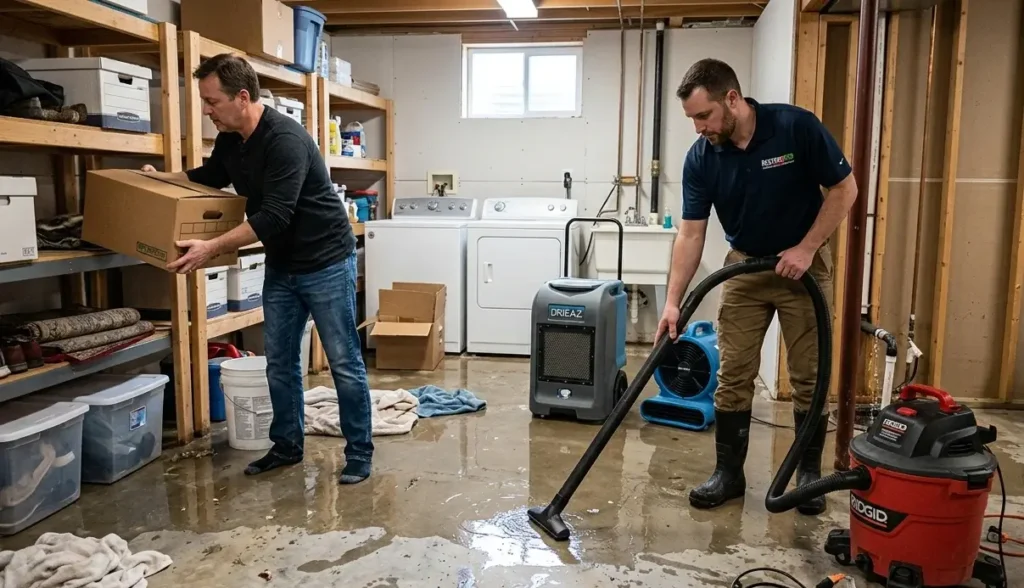
Consider this scenario. You walk down your stairs on a Tuesday morning, expecting to grab a box of old winter coats. Instead, you hear a distinctive, hollow splashing sound. Your heart sinks. Standing water has taken over your lower level. Most homeowners in Toronto know this sinking feeling all too well, especially after a heavy spring thaw or a sudden summer storm. Panic sets in, and you find yourself standing on the bottom step, wondering what your very next move should be. Have you ever tried stopping a waterfall with a large bath towel? That is exactly what the wrong first steps feel like.
Every minute that ticks by allows water to seep deeper into your drywall, flooring, and cherished belongings. People often freeze because they simply do not know what to do first. We are Property Worx, and we have seen our fair share of indoor lakes. As a trusted emergency response partner in your neighbourhood, we want to offer you a clear, safety-first action plan. This basement flood emergency guide will walk you through the vital first hour of an incident. We provide expert-backed guidance to help you navigate the chaos, stop the spread, and protect your home’s foundation.
Key Takeaways Before You Dive In
- Safety is paramount: Always shut off power at the circuit breaker before stepping into any standing water.
- Stop the flow: Locate your main water supply and turn it off if the flood is plumbing-related.
- Document everything: Take clear photos and videos of your items before moving them for your insurance claims.
- Time matters: Water damage restoration becomes more complex and costly the longer moisture sits in your home
Why the First 60 Minutes After Basement Flooding Are Critical
Why the rush? Water is notoriously efficient at quickly destroying building materials. Within the very first hour, water saturates everything porous. Your drywall acts like a giant sponge, soaking up moisture and weakening the framing of your home. Rapid water damage progression means that a seemingly small puddle can escalate into severe structural damage before you even have time to finish your morning coffee. Time is of the essence, and waiting is not an option.
Furthermore, the clock on mould growth starts ticking almost immediately. Microscopic spores only need moisture, a food source, and a little bit of time to thrive. By addressing the water intrusion right away, you drastically reduce the chance of turning your lower level into a damp, unhealthy environment.
Electrical hazards also multiply over time. Water creeping closer to outlets or exposed wires poses a severe risk to anyone in the vicinity. Taking decisive action right away limits these dangers and sets the stage for an effective water damage basement cleanup. Mastering the right flooded basement first steps can save your walls, your belongings, and your peace of mind.
Step-by-Step: What to Do in the First 60 Minutes
Handling an emergency basement flood cleanup requires a cool head and quick reflexes. Follow this minute-by-minute breakdown to stay safe and minimize the destruction.
Minute 0–10: Ensure Safety First
Before you rush in to save your grandmother’s antique armchair, stop and assess the environment. Are there electrical hazards present? Water and electricity are a very dangerous combination. If you can reach your circuit breaker safely and it is located on a dry upper floor, turn off the power to the lower level immediately. If the breaker is located inside the affected area, stay out and call your utility provider.
You must also avoid the hidden risks of standing water. Is the water clear, or does it smell foul? Identifying the level of floodwater contamination is an essential step. If you suspect a sewer backup, keep your distance. These flooded basement safety tips are non-negotiable for your well-being. Searching for “basement flooding what to do usually” happens when you are already up to your knees in trouble, but putting safety first will always be step one.
Minute 10–20: Stop the Source of Water
If you have established that the area is safe to enter, your next mission is to stop the flow. Do you know where your main shut-off valve is? Finding and turning off the main water supply can halt the problem instantly if you are dealing with a burst pipe or a broken hot water tank.
Take a quick look around for visible leaks or failing plumbing. Sometimes, the culprit is obvious. However, when the source cannot be controlled (like heavy Toronto rainfall overwhelming your foundation or a severe sump pump failure), you need to shift your focus to containment. You cannot fight city plumbing or Mother Nature, so pivot toward immediate damage control rather than trying to plug an unpluggable leak.
Also Read: Storm Damage vs Plumbing Damage: What’s the Difference?
Minute 20–30: Protect Yourself and Your Property
Now is the time to gear up. Put on rubber boots and gloves to protect your skin from potential irritants. Once you are properly dressed for the occasion, start moving valuables out of harm’s way. Lift electronics, important documents, and small pieces of furniture up to higher ground.
To prevent further water spread, you might use rolled-up towels or sandbags at doorways to protect adjacent dry rooms. You are essentially building a small fortress to keep the dry areas dry. Every single item you save now is one less thing to replace later.
Minute 30–45: Start Initial Water Removal (If Safe)
How do you get rid of the puddle? If the water is clean, manageable, and safe to handle, you can begin the initial extraction. Using specialized pumps, wet vacs, or even sturdy buckets can make a noticeable dent in the standing water. If you are wondering how to remove water from a basement fast, a heavy-duty wet/dry vacuum is often your best tool for shallow pooling.
There are, however, times when you should NOT attempt removal. If the water level is rising rapidly, if it is heavily contaminated with debris, or if you feel physically unsafe, step back. Leave the heavy lifting to the professionals.
Minute 45–60: Call Professionals & Document Damage
As the hour wraps up, it is time to bring in the cavalry. If the mess is too large, you will want to skip the DIY methods. Knowing when to call restoration experts can save you thousands of dollars in the long run. Instead of frantically typing water damage restoration near me into your search bar while water rises, you can rely on trusted local experts to take over.
Before anyone starts tearing up drywall or extracting water, document the scene thoroughly. Take extensive photos and videos of the damage, the water level, and ruined items. This visual evidence will be the cornerstone of your insurance claims process. Knowing exactly what to do after a basement flood ensures you are prepared when the insurance adjuster asks for proof.
Also Read: Top Causes of Basement Flooding in Toronto & How to Prevent Them
What NOT to Do After Basement Flooding (Critical Mistakes)
When panic takes the wheel, people often make poor decisions. Have you ever thought, “I will just plug in my regular vacuum to suck up this puddle”? Using household vacuums for water removal is a surefire way to ruin your appliance and potentially electrocute yourself. Standard vacuums are designed for dry debris only.
Another massive error is entering the water without shutting off the power. We cannot stress this enough: your life is worth far more than a soggy couch. Do not gamble with electrical currents.
Delaying cleanup is equally harmful. Telling yourself you will deal with it tomorrow simply gives moisture more time to seep into the concrete and framing. Finally, ignoring contamination risks can lead to serious health issues. If the water looks murky or smells bad, treat it as a biohazard (because it very likely is).
Understanding the Type of Flood Water (Why It Matters)
Not all floods are created equal. The industry categorizes floodwater contamination into three groups: clean water, gray water, and black water. Knowing these distinctions helps you respond appropriately.
- Clean Water: This usually comes from a broken water line, a fresh rain leak, or a failing supply hose. It poses no immediate health threat, though it will cause structural issues if left untreated.
- Gray Water: Perhaps stemming from a washing machine overflow or a dishwasher leak, gray water contains chemical or biological pollutants that can cause discomfort or mild sickness.
- Black Water: This is the nightmare scenario. Black water includes raw sewage, rising river water, and serious bacterial threats. It is highly toxic.
The health risks associated with each type dictate your response. While you might mop up clean water yourself, touching black water requires professional protective equipment. When dealing with gray or black water, professional cleanup is mandatory to ensure the space is thoroughly sanitized.
When to Call a Professional Water Damage Restoration Company
Sometimes, a mop and a bucket simply will not cut it. How do you know when it is time to throw in the towel and dial for help? If you notice signs that the damage is beyond DIY efforts, such as water wicking several inches up the drywall or warped baseboards, it is time to call for backup.
Sewage contamination scenarios require immediate expert intervention. There is no room for compromise when hazardous bacteria enter your home. Furthermore, if you notice structural or electrical risks, such as sagging ceilings or sparking outlets, evacuate the area immediately. Time-sensitive situations demand the rapid deployment of industrial dehumidification systems and air movers to prevent secondary damage to your home’s framework.
If you find yourself overwhelmed, request immediate basement flood cleanup assistance to get our specialized team on-site promptly.
Basement Flood Cleanup Costs (What to Expect)
Let us talk numbers. Nobody likes unexpected expenses, but understanding the economic situation can ease your mind. Average cost ranges vary widely depending on the scale of the disaster. A small, clean-water leak might cost only a few hundred dollars to extract and dry out, while a severe sewage backup involving extensive demolition can cost thousands.
Several factors affect pricing. The size of the affected area, the contamination level, and the duration the water has been sitting all play a major role in the final bill. If mould growth has already started, remediation adds another layer to the overall cost.
When comparing costs between DIY and professional services, remember that DIY might seem cheaper upfront. However, missing hidden moisture pockets often leads to expensive structural repairs down the line. Investing in proper basement flood cleanup services provides peace of mind that the job is done right the first time.
Does Insurance Cover Basement Flooding?
This is the million-dollar question. What do typical policies include or exclude? Most standard homeowners’ insurance policies cover sudden, accidental internal water damage, such as a burst pipe or a broken water heater. If a pipe bursts behind your wall, you are generally covered.
However, groundwater seepage or sewer backups often require specific endorsements. The difference between flood insurance and standard homeowners insurance is crucial here. Overland flooding, such as heavy rain entering through basement windows, usually requires a separate policy rider.
To secure faster claims approval, communication is key. Call your broker promptly, provide your documented photos, and keep all receipts related to your emergency response efforts. Clear documentation makes it much harder for adjusters to dispute your claim.
How to Prevent Future Basement Flooding
Once the area is dry, your focus should shift to defence. An ounce of prevention is worth a pound of cure, right? Sump pump maintenance should be at the top of your seasonal checklist. Test your pump regularly by pouring a bucket of water into the pit, and consider installing a battery backup for those stormy nights when the power fails.
Take a walk around your property to evaluate drainage improvements. Ensure your downspouts direct rain far away from your foundation walls. If your Toronto property is prone to dampness, consider professional waterproofing solutions such as interior weeping tiles or exterior membrane applications.
Finally, commit to regular inspections. Have a plumber check your valves and hoses annually. Being proactive is the best way to keep your lower level dry, functional, and ready for whatever the Canadian weather throws your way.
Also Read: How Much Does Water Damage Repair Cost in Toronto? Guide
What to Prioritize Based on the Severity of Flooding
Every situation is unique. Moisture meters and professional assessments can reveal the true extent of the damage, but here is how to triage the mess based on what you initially find.
Minor Flooding
If you are dealing with a small water intrusion, like a spilled bucket or a minor appliance leak, breathe a sigh of relief. Limited cleanup is needed. You can likely manage this with some old towels, a fan, and a good mop. Keep an eye on the area for a few days to ensure it stays completely dry.
Moderate Flooding
A larger area affected means more work. If water has spread across half the room or soaked into carpets, professional water damage restoration is highly recommended. Moisture hides efficiently beneath floorboards and behind trim, making thorough drying difficult without industrial equipment.
Severe Flooding
This is the worst-case scenario. Full basement flooding, where water is inches deep across the entire floor plan, means you need help right away. Immediate professional intervention is required to pump out the large volume of water, strip ruined materials, and sanitize the underlying framing.
Take Control Quickly to Minimize Damage
Facing a flooded lower level is daunting, but taking immediate, focused action can turn a potential disaster into a manageable bump in the road. By adhering to these steps, you protect your property and your family from escalating hazards.
Remember, fast action makes the biggest difference. The sooner the water is extracted, the less likely you are to deal with long-term issues like structural rot or lingering damp odours. If you are ever unsure about the extent of the issue, having a professional assess the situation can help you move forward with confidence. Do not wait for the situation to worsen. Get Emergency Water Damage Help Now and let Property Worx restore your peace of mind and your home.
