

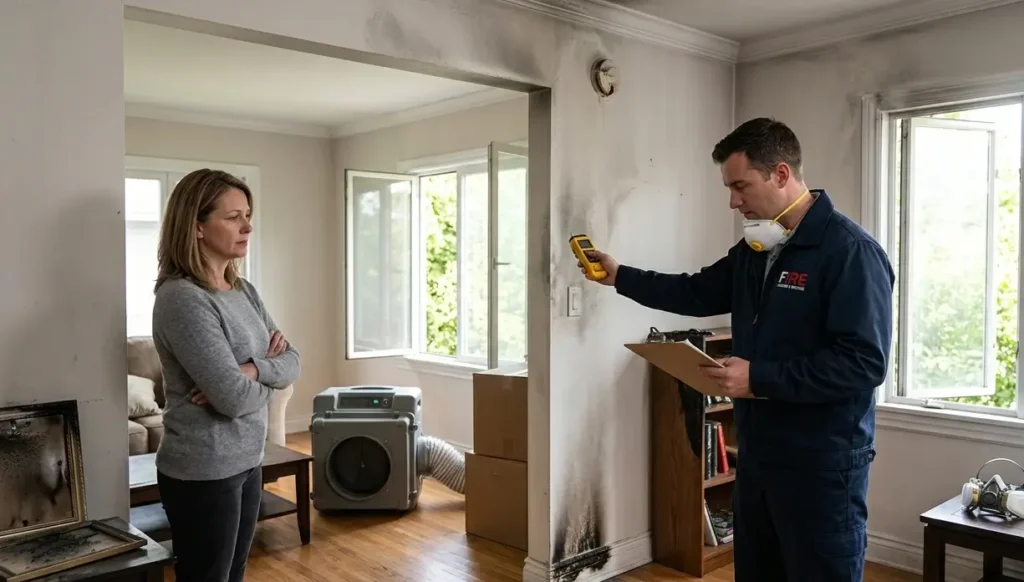
In most cases, it is not safe to stay in a house immediately after a fire. Even if the flames are out, hidden dangers like toxic smoke residue, poor air quality, structural damage, and electrical hazards can pose serious health and safety risks. A professional inspection is usually needed before reoccupying the home.
Quick Answer Summary
It may be safe ONLY if:
- The fire was minor and contained.
- No visible smoke or soot damage.
- No structural or electrical damage.
- Air quality is confirmed safe.
It is NOT safe if:
- You smell smoke or chemicals.
- There is visible soot or residue.
- Structural damage is present.
- Utilities are compromised.
Key Takeaways
- Experiencing a house fire is stressful, and knowing your next steps is vital for your family’s well-being.
- Asking “Is it safe to stay in the house after a fire?” requires looking beyond what the eye can see, as the most serious hazards are often invisible.
- Professional assessments are a necessary step to ensure your living space is truly secure before you unpack your bags.
Why It’s Often Unsafe to Stay After a Fire
A home might look reasonably intact once the fire department leaves, but looks can be deceiving. There is often hidden contamination even after flames are gone. A fire acts like an uninvited guest that leaves a toxic mess in every corner of your property. Smoke particles remain in the air and on surfaces long after the embers cool down. These microscopic invaders settle into carpets, furniture, and drywall.
Additionally, the structural integrity may be compromised in ways you cannot easily spot. Heat weakens wood framing and melts critical fasteners inside your walls. On top of that, toxic gases can linger in the environment. Burning plastics and synthetic fabrics release chemicals that you do not want your family breathing in. If you are wondering about after-fire house safety, the smartest approach is to err on the side of caution.
The Biggest Hidden Dangers After a House Fire
You might think the primary threat is over once the fire is extinguished. What else could go wrong? Quite a bit, actually. The aftermath presents several severe risks that require immediate attention.
- Toxic smoke and soot exposure: Smoke damage, soot, and ash contain carcinogens. These particles coat surfaces and easily become airborne again when disturbed.
- Carbon monoxide and harmful gases: This colourless, odourless gas can pool in your home. Carbon monoxide poisoning is a quiet but severe threat.
- Structural weakening: Flooring and roof supports might look fine on the surface, but can buckle under normal weight due to heat damage.
- Electrical and fire re-ignition risks: Melted insulation on wiring creates immediate electrical hazards. A secondary fire is a real possibility if the power is turned back on prematurely.
- Water damage leading to mould: Firefighters use large volumes of water to save your home. This necessary step leaves behind severe water damage. Within 48 hours, mould can begin to grow in damp wall cavities.
Health Risks of Staying in a Fire-Damaged Home
Your health is your most valuable asset. Exposing yourself to a post-fire environment poses significant physical risks. Is smoke damage dangerous to live in? Yes, it poses several medical concerns that can appear quickly or develop over time.
- Respiratory irritation and breathing issues: Inhaling airborne soot triggers coughing, shortness of breath, and asthma attacks.
- Skin and eye irritation: Ash and chemical residues are highly acidic. Touching compromised surfaces can lead to rashes, while airborne particles easily irritate your eyes.
- Long-term exposure risks: Prolonged contact with fire residues increases the likelihood of developing chronic respiratory conditions.
- Higher risk for vulnerable individuals: Children, older adults, and those with pre-existing heart or lung conditions face a much higher fire damage health risk than healthy adults.
Also Read: What to Do After a House Fire: Step-by-Step Homeowner Checklist
When It Might Be Safe to Stay (Rare Cases)
Are there any situations where you can simply open a window and carry on? Can you stay in a house after a fire under any circumstances? Sometimes, but these situations are rare.
- Very small, localized fire: If you had a minor stovetop flare-up that was quickly contained with a lid or small extinguisher, the rest of the home might be fine.
- No lingering odour or residue: If there is no smell of burning plastic or wood, and no visible ash beyond the immediate incident area.
- Systems inspected and cleared: Your HVAC, electrical, and plumbing systems must be untouched by the heat.
- Air quality tested and safe: Indoor air quality (IAQ) tests must confirm that particle levels are within normal limits.
Even in these minor scenarios, professional confirmation is still recommended to ensure nothing was missed.
When You Should Leave Immediately
There are clear red flags that indicate you need to pack an overnight bag and find alternative lodging. Do not second-guess these warning signs.
- Strong smoke smell: If the odour is prominent, harmful particles are still floating through your living space.
- Visible soot or ash: A layer of black or grey dust means contamination has spread.
- Structural instability: Sagging ceilings, warped doorways, or soft spots in the floor are clear indicators of danger.
- Electrical or gas concerns: Flickering lights, a hissing sound, or the smell of gas mean you must evacuate at once.
- Extensive water damage: Standing water or soaked drywall creates an unsafe environment and a breeding ground for bacteria.
Can You Sleep in a House With Smoke Damage?
When exhaustion sets in, you might wonder, “Can I sleep in the house after a fire?” The short answer is generally no.
The risks of overnight exposure are too great. When you sleep, your breathing rate changes, and you spend hours drawing in the surrounding air. Airborne particles remain harmful and will settle deep into your lungs while you rest. The smoke inhalation risk home environments present is simply not worth trading for a night in your own bed.
What to Do Before Re-Entering Your Home
Taking the right steps before you step back through your front door can prevent injuries and further property damage.
- Wait for fire department clearance: Never enter a building until the fire marshal explicitly tells you it is acceptable to cross the threshold.
- Avoid contact with contaminated areas: Do not touch walls, furniture, or debris. The oils from your skin can push soot deeper into surfaces.
- Use protective gear if entering briefly: If you are permitted to grab essential medications or documents, wear an N95 mask, long sleeves, and sturdy boots.
- Do not turn utilities back on without inspection: Keep the gas, water, and electricity off. Flipping a switch could trigger an explosion or a severe shock.
Why a Professional Inspection Is Critical
Why not just clean it yourself? Because what you cannot see can hurt you. Utilizing post-fire inspection services provides a clear roadmap for recovery.
- Identifies hidden risks: Professionals know exactly where to look for melted wiring and compromised supports.
- Confirms air quality safety: Experts use specialized equipment to measure invisible toxins.
- Evaluates structural integrity: Engineers can tell you if a charred beam is structurally sound or requires replacement.
- Provides clearance for safe occupancy: An official green light gives you peace of mind and is often required for insurance claims.
What Happens During a Post-Fire Inspection
If you have never been through this process, you might wonder what the experts actually do. Fire restoration services follow a strict protocol.
- Structural safety check: Inspectors evaluate the foundation, roof, and framing.
- Air quality testing: They check for lingering volatile organic compounds and carbon monoxide.
- Soot and contamination analysis: Specialists map the extent of smoke travel through the property.
- HVAC system inspection: Ductwork is examined for HVAC contamination. If soot entered your vents, turning on the furnace will blow toxic dust through every room.
- Safety recommendations: You receive a detailed report outlining the required steps for safe restoration, which often includes bringing in industrial HEPA filtration units.
How Long Should You Wait Before Returning Home?
Patience is a virtue, especially when dealing with property damage. When is it safe to return after a fire? It depends heavily on the severity of the damage.
- Depends on damage severity: Every fire is unique, and so is every recovery timeline.
- Minor: You are possibly looking at a 24 to 48-hour wait, but only after a professional inspection clears the space.
- Major: If the fire breached walls or required significant water to extinguish, you might be out of the home for days to weeks.
- Emphasize: Always put safety first over speed. Rushing back into a compromised home only invites further trouble.
Common Misconceptions About Fire Damage Safety
Misinformation can lead to poor decisions. Let’s clear up a few myths.
- “If the fire is out, it’s safe.” As discussed, the flames are just the first phase of the hazard.
- “Opening windows removes smoke risk.” While ventilation helps, it does not remove particles that have embedded themselves into your upholstery and carpets.
- “Soot is harmless.” Soot is highly corrosive and toxic. Leaving it on surfaces causes permanent damage and poses an ongoing health threat.
Also Read: Smoke & Odor Removal After House Fire: Pro Techniques
FAQs
Is smoke smell dangerous?
Yes, a lingering smoke smell indicates the presence of microscopic soot particles and volatile organic compounds. Breathing these in can cause respiratory issues and other health complications over time.
Can I clean soot myself?
For minor smudges from a candle, yes. However, cleaning soot from a house fire requires specialized chemicals and techniques. Using standard household cleaners often smears the soot and pushes it deeper into porous surfaces.
What items are safe to keep?
Non-porous items like glass, metal, and hard plastics can usually be cleaned and sanitized. Porous materials like mattresses, heavily soiled clothing, and contaminated food products should typically be discarded.
How long does air remain contaminated?
Without proper professional remediation, indoor air can remain contaminated for months. Toxic particles settle into ductwork and fabrics, continually re-contaminating the air whenever they are disturbed.
Do I need professional restoration?
In almost all cases involving structural fire or significant smoke, professional fire restoration is necessary. Experts have the required safety gear, training, and equipment to effectively neutralize hazards and handle the ensuing water damage safely.
Make Sure Your Home Is Truly Safe Before Staying
Deciding whether to return to your property is a weighty choice. We have covered the hidden dangers, the health risks, and the reasons why a quick visual check is never enough. The core takeaway is simple: patience and professional verification are your best tools right now. The aftermath of an emergency is confusing, and it is natural to want to get back to normal as quickly as possible. However, safety must remain the priority.
Even when damage appears minor, unseen risks can remain hidden behind walls or in your ventilation system. Having a qualified professional evaluate your home can provide the clarity needed to move forward safely. Do not rely on guesswork when your family’s health is on the line. Ensure you get a professional assessment before re-entering your home. Take the right steps today to protect your tomorrow. Schedule a post-fire safety inspection with Property Worx to get the expert guidance and peace of mind you deserve.
