

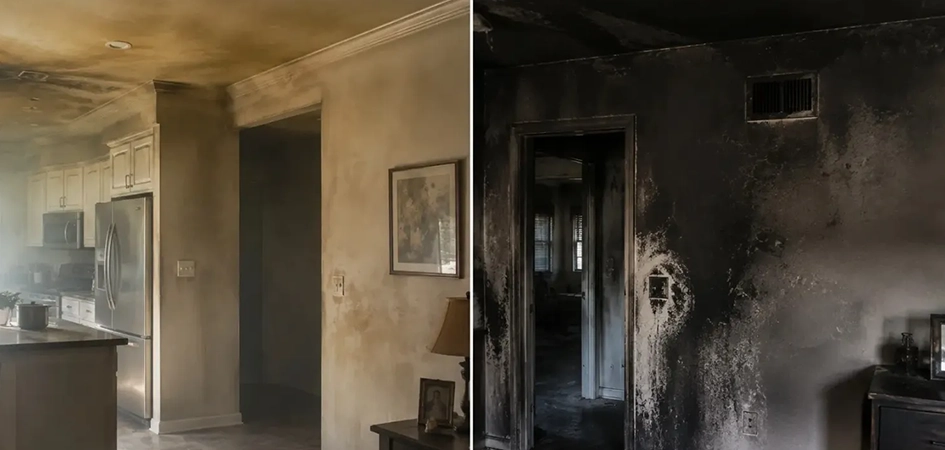
Picture this scenario. You just experienced a small kitchen fire. Thankfully, everyone is safe, and the flames are out. But now, your house still carries a stubborn, smoky smell. The walls have dark, unsightly marks, your ceilings look stained, and your personal belongings feel sticky and dusty to the touch. It is a stressful situation, and knowing where to start the cleanup can feel overwhelming.
Many homeowners use the terms “smoke damage” and “soot damage” interchangeably, as if they are the exact same thing. In reality, they are two very different types of fire contamination. Understanding smoke damage vs soot damage is crucial because they affect your property in distinct ways. The difference matters immensely because smoke and soot directly impact your cleanup method, odour removal strategies, indoor air quality, surface damage, HVAC systems, contents restoration, and even your insurance documentation. Ultimately, knowing what you are dealing with affects the overall restoration cost and timeline.
This guide will break down exactly what smoke damage means, what soot damage entails, and the key differences between the two. We will also cover why both issues need to be professionally inspected and exactly when you should call Property Worx for your fire damage restoration in Toronto.
Key Takeaways
- Smoke damage includes lingering odour, staining, airborne particles, residue, and contamination that can easily spread far beyond the original fire area.
- Soot damage is the dark, physical residue left behind when materials burn incompletely.
- Smoke has a habit of travelling through rooms, vents, insulation, furniture, and HVAC systems.
- Soot can present as acidic, oily, powdery, or sticky, depending entirely on what materials were burned.
- Wiping soot with standard household cleaners can spread stains or push the residue deeper into porous surfaces.
- Professional fire restoration helps safely remove residue, control stubborn odours, improve air quality, and properly document the damage for your insurance claim.
- Property Worx provides expert fire and smoke damage restoration, soot removal, odour control, contents cleaning, and full reconstruction support to get your life back to normal.
What Is Smoke Damage?
Smoke damage refers to the physical and airborne aftermath of a fire, primarily consisting of odours, fine airborne particles, and residues that settle onto surfaces. Unlike a burn mark, smoke damage can be invisible, revealing itself mostly through smell or gradual discolouration.
Common Signs of Smoke Damage
Identifying smoke damage early helps prevent long-term issues. Keep an eye out for these common signs:
- A lingering smoke smell after fire incidents that just will not fade.
- Yellow, grey, or brown staining on surfaces.
- Discoloured walls and ceilings.
- A strong smoke odour in house environments, especially trapped in furniture or fabrics.
- Smoke smell lingering inside closed cabinets or closets.
- A hazy, unclear residue on glass or mirrors.
- HVAC or duct contamination spreading the smell.
- Irritated indoor air quality causing coughing or discomfort.
- The smoke smell returning even after a thorough surface cleaning.
How Smoke Spreads Through a Property
Smoke is a master of mobility. It can travel far beyond the room where the fire originally started. Because smoke behaves like a gas under pressure, it seeks out cooler areas and forces its way into hidden spaces. Smoke can easily move into wall cavities, ceilings, insulation, attics, and ductwork. It also infiltrates HVAC systems, carpets, upholstery, everyday clothing, cabinets, and sensitive electronics.
Why Smoke Damage Needs Proper Odour Control
You might wipe down a wall and think the job is done, but smoke odour can remain long after visible staining is cleaned. Standard air fresheners only mask the problem. Proper smoke odour removal is a scientific process. Professional smoke restoration often involves HEPA air filtration to catch fine particles, air scrubbers to clean the environment, and hydroxyl treatment or thermal fogging to neutralize odours at a molecular level. Deep cleaning, deodorization, the removal of permanently contaminated materials, and a full HVAC inspection and cleaning are often required to truly clear the air.
What Is Soot Damage?
Soot damage is the physical, dark, and often greasy residue left behind when materials burn incompletely. While smoke is largely about gases and fine airborne particulates, soot is the tangible dirt and ash that clings to your property.
Common Signs of Soot Damage
If you are wondering what to look for, here are the usual suspects:
- Black residue after fire on walls, ceilings, or trim.
- A fine, powdery dust settling after a fire.
- Sticky or greasy residue that smears when touched.
- Dark marks pooling around air vents.
- Heavy staining directly near the fire source.
- Visible soot on furniture, kitchen appliances, or electronics.
- Black smudges appearing when surfaces are brushed against.
- Discolouration setting deeply into porous surfaces.
Why Soot Can Be More Than Surface Dirt
Soot is definitely not your normal, everyday dust. It is a hazardous mixture that can contain fine soot particles, chemicals, and acidic residue from burned materials. Because it is so fine, soot can settle on almost anything. You will find it on drywall, paint, wood framing, flooring, metal fixtures, glass, delicate fabrics, electronics, countertops, cabinets, and air vents. Leaving it untreated can lead to permanent etching or tarnishing.
Why Soot Cleanup Requires the Right Method
Not all soot is created equal, so different types require very different cleaning approaches.
- Dry soot, often from fast-burning wood, may need to be cleaned with dry-cleaning sponges first to prevent it from turning into mud.
- Oily soot, common in kitchen grease fires, will smear terribly if wiped incorrectly.
- Protein residue from burned food can leave incredibly strong odours and an invisible, sticky film.
- Fires involving synthetic materials or burned plastic create a thick, sticky residue that is notoriously difficult to lift.
- Porous materials such as untreated wood and fabrics readily absorb soot and odour, requiring specialized extraction.
Smoke Damage vs Soot Damage: The Key Differences
To help clarify the differences, here is a quick breakdown of smoke vs soot damage.
| Feature | Smoke Damage | Soot Damage |
| Main Issue | Involves odour, staining, airborne particles, and widespread contamination. | Involves black residue left from incomplete burning of materials. |
| Visibility | Can be visible (haze) or invisible (trapped odours). | Usually highly visible as black, grey, or brown residue. |
| Spread | Can easily travel throughout the entire property via air currents. | Often settles on surfaces near the fire, but can spread through air movement. |
| Main Risk | Affects odour, indoor air quality, and hidden structural contamination. | Causes deep staining, permanent surface damage, and leaves acidic residue. |
| Cleanup Method | May need air filtration, deodorization, and extensive deep cleaning. | Needs specialized residue removal and precise surface cleaning. |
| DIY Risk | Smoke odour may return repeatedly if not treated properly at the source. | Soot can smear, stain permanently, or become much harder to remove. |
Appearance
When looking at your property, smoke damage may appear as faint staining, a general haze, yellowing, or a lingering odour. On the other hand, soot damage often appears as a very distinct black, grey, powdery, oily, or sticky residue on surfaces.
Texture
Texture is a dead giveaway. Soot may feel dry, powdery, greasy, or sticky depending entirely on the fire source and what burned. Smoke residue, however, may not always feel obvious on surfaces, often leaving a smooth but discoloured finish.
Odour
While both carry unpleasant smells, smoke damage is usually the primary culprit behind the burning smell. Soot damage may also carry a distinct odour because it contains residue from burned material.
Location
Smoke is a traveller. It can spread throughout the entire building, seeking out any available space. Soot is often heaviest right near the fire source, gathering around vents, clinging to ceilings, and coating nearby horizontal surfaces.
Cleanup Method
Because of its nature, smoke damage often requires intensive deodorization and air quality treatment to be fully resolved. Soot damage needs careful, specialized residue removal before any repairs, sealing, or painting can begin.
Why the Difference Matters for Property Owners
It Affects the Cleanup Plan
You cannot treat smoke and soot with the same cleaning method. If you try a one-size-fits-all approach, you might end up making things worse. Using the wrong method or chemicals can easily spread the residue across clean areas, push soot deep into porous materials, and lock in odours forever. It can also permanently damage paint or delicate finishes, make your insurance documentation much harder to sort out, and ultimately increase your total restoration costs.
It Helps Identify the Extent of Damage
Visible soot on walls after a fire may only reveal a small part of the actual problem. While the soot might be localized, the smoke may have travelled into hidden areas you cannot see. Knowing the difference reminds you to check critical areas like HVAC systems, attics, wall cavities, hidden closets, inside cabinets, insulation, furniture, daily contents, and sensitive electronics.
It Can Affect Insurance Documentation
When dealing with an insurance claim, clarity is your best friend. Please note that coverage always depends on your specific policy, the cause of loss, your documentation, and the insurer’s assessment. Insurance providers typically need clear documentation separating smoke contamination, soot residue, contents damage, odour issues, structural damage, and all required restoration steps. Proper documentation for a smoke damage insurance claim may include detailed photos, moisture readings (especially if water was used during firefighting), specific soot contamination notes, a formal odour assessment, a complete contents inventory, a detailed cleaning scope, and structural repair recommendations.
Signs You Have Smoke Damage
Smoke Smell That Will Not Go Away
If you clean your home and that lingering odour is still there, it likely means smoke particles are permanently trapped in materials or circulating within your air systems.
Stains on Walls, Ceilings, or Fixtures
Smoke does not just smell; it leaves a mark. Smoke can leave yellow, brown, grey, or shadow-like staining on your walls and light fixtures.
Odour Inside Cabinets, Closets, or Fabrics
Because smoke behaves like a pressurized gas, it loves to settle in enclosed spaces and soft, porous materials like your wardrobe or living room upholstery.
HVAC or Vent Odours
If you turn on your heat or air conditioning and are hit with a campfire smell, smoke has likely travelled through your ducts and vents. This causes the smell to return on a loop even after you clean the rooms.
Poor Indoor Air Quality After a Fire
If your family is experiencing irritation, coughing, stale air, or a smoky smell whenever the HVAC system runs, your indoor air quality has been compromised by microscopic smoke particles.
Signs You Have Soot Damage
Black Residue on Surfaces
The most obvious sign of soot damage is a dark, visible residue on walls, ceilings, trim, doors, cabinets, and counters.
Dark Marks Around Vents or Ceiling Corners
Air movement naturally carries soot particles. You will often see them gather like dark webs around vents, textured ceilings, and tight corners.
Greasy or Sticky Film
Not all soot is dry. Some fires, particularly those in the kitchen or involving synthetics, create a greasy residue that does not simply wipe away with a wet cloth.
Smudging When Touched
If you touch a dark spot on the wall and it immediately smears like charcoal, you are dealing with soot. Touching soot can easily spread it and cause deeper, permanent staining.
Soot on Personal Belongings
Your personal items are not safe from soot. Electronics, soft furniture, clothing, important documents, and home décor may all need special cleaning to prevent acidic corrosion or permanent discolouration.
Why DIY Smoke and Soot Cleanup Can Make Damage Worse
Regular Cleaning Products May Not Work
It is tempting to grab a bottle of all-purpose cleaner under the sink, but standard household cleaners may actually smear soot, react negatively with the chemical residue, or simply leave the odour behind.
Wiping Soot Can Push It Deeper
When dealing with porous materials like drywall, untreated wood, fabric, and painted surfaces, aggressively wiping soot can force the particles deeper into the material’s pores, making it impossible to extract later.
Painting Over Smoke or Soot Does Not Fix It
A fresh coat of paint might seem like a quick fix, but it is a temporary illusion. Odours and dark stains can easily bleed right through the new paint if the surface is not properly cleaned, neutralized, sealed, and restored first.
Hidden Smoke Contamination Can Be Missed
DIY cleaning usually focuses on what the eye can see. Unfortunately, this means DIY efforts often miss vital areas like HVAC systems, attic insulation, wall cavities, and deeply affected contents.
Firefighting Water Can Add Another Problem
If the fire department had to use water to extinguish the flames, you are now dealing with two problems. Water used to fight a fire can cause immediate moisture damage, pose severe mould risks, and require complex structural drying. If your property is soaked, you can read more about navigating wet environments in our guide on Flood Damage vs. Water Damage: What’s the Real Difference? or learn about the risks of untreated moisture on our Mould Removal & Remediation page.
Common Causes of Smoke and Soot Damage
Kitchen Fires
The kitchen is a common culprit. Issues here include grease fires, severely burned food, oven fires, appliance malfunctions, and subsequent cabinet smoke damage.
Electrical Fires
Hidden behind walls or at outlets, electrical fires leave distinct residues. These include wiring issues, overloaded outlets, sparked electrical panels, shorted electronics, and major appliance malfunctions.
Candle, Fireplace, and Chimney Issues
Sometimes the damage is a slow build. Candle soot, fireplace smoke backup, chimney residue, and improper ventilation can gradually coat a living room over the course of a cold Ontario winter.
Furnace or HVAC Problems
Your heating system can betray you. Look out for furnace puffbacks, unintended smoke circulation, soot gathering near vents, and heavily contaminated ductwork.
Larger Structural Fires
Major emergencies result in heavy smoke contamination, heavily burned building materials, extensive water damage from firefighting efforts, the need for structural repairs, and a massive contents restoration project.
When Smoke or Soot Damage Needs Professional Inspection
The Smoke Smell Keeps Returning
If the returning odour is driving you crazy, it means the true source has not been fully treated or removed.
Soot Is Visible on Walls, Ceilings, or Vents
Any visible soot should be professionally assessed before you attempt any cleaning or repainting to ensure you do not make the staining worse.
The Fire Affected More Than One Room
Smoke can travel incredibly quickly. If the fire was in the kitchen but the bedrooms smell, smoke has affected areas far from the fire source.
HVAC Systems May Be Contaminated
Your lungs deserve clean air. Professionals can thoroughly inspect vents, filters, ducts, and air movement pathways to ensure your system is blowing clean air, not soot.
Electronics or Valuable Contents Were Exposed
Soot contains acidic residue that can eat away at circuit boards. Professional soot removal is necessary to save electronics, important documents, furniture, clothing, and sentimental items.
Insurance Documentation Is Needed
Dealing with adjusters can be tricky. Professional assessment reports can help support your claims and drastically reduce confusion during the entire restoration process.
The Property Worx Approach
When disaster strikes your Toronto property, Property Worx is ready to step in and handle the heavy lifting. We help homeowners and businesses recover fully from fire, smoke, and soot damage by providing comprehensive professional inspections, emergency stabilization, careful soot removal, advanced odour control, contents cleaning, superior air filtration, insurance documentation, and full reconstruction support. Our dedicated fire and smoke damage restoration team starts with a 24/7 emergency fire restoration response. We conduct an initial safety inspection, followed by a rigorous smoke and soot damage assessment, including a detailed HVAC and air-quality check.
Our technicians handle professional soot removal from walls, ceilings, fixtures, and delicate contents. To tackle the air quality, we deploy HEPA filtration and industrial air scrubbers, followed by targeted smoke odour removal and deodorization. If firefighting water is present, we handle water extraction and drying. We also manage content pack-out and cleaning, provide insurance-ready documentation, and oversee reconstruction and repairs as needed. If you want to explore all our capabilities, you can view our full property restoration services.
Common Misconceptions About Smoke and Soot Damage
“If the fire was small, the damage is small.”
Do not let a small flame fool you. Even a minor kitchen fire can create overwhelming smoke odour, widespread soot residue, and hidden contamination that coats the whole floor.
“Soot is just dirt.”
It is easy to treat it like dust, but soot is acidic fire residue. It contains chemicals and needs to be handled carefully to avoid health risks and permanent property damage.
“If I clean the visible soot, the problem is gone.”
Looks can be deceiving. Even if the walls look clean, invisible smoke odour, air contamination, HVAC residue, and hidden soot in the wall cavities may remain.
“I can just paint over smoke stains.”
Painting over a problem does not erase it. Stains and trapped odours can (and will) bleed through new paint if the surfaces are not properly cleaned, treated, and sealed first.
“Smoke smell will fade on its own.”
Time does not heal all wounds. Smoke odour can stay permanently trapped in porous materials and will likely require professional deodorization to be truly neutralized.
How to Protect Your Property After Smoke or Soot Damage
Do Not Touch Soot-Covered Surfaces
It is tempting to see how bad the dirt is, but touching or wiping soot with your hands or standard towels can spread stains and push the oils deep into the drywall.
Turn Off HVAC If Safe to Do So
Your furnace or air conditioner acts as a distribution system. Turning off HVAC systems can prevent them from spreading smoke particles and odour through the rest of the clean property.
Ventilate Only If It Is Safe
Opening windows can help, but homeowners should always follow fire department guidance and avoid entering unsafe, structurally compromised areas just to open a window.
Document the Damage
Before the cleanup begins, document everything. Take clear photos of all affected rooms and list damaged belongings. Save all receipts related to the incident, avoid throwing away items before documentation is complete, and contact your insurance provider promptly.
Call a Fire Restoration Professional Quickly
Time is of the essence in fire restoration. Fast action can significantly reduce permanent staining, stop further odour absorption, prevent secondary damage from acidic soot, and keep your overall restoration costs down.
Why Choose Property Worx?
Navigating the aftermath of a fire is daunting, but you do not have to do it alone. Property Worx supports homeowners, landlords, property managers, and businesses across the GTA with top-tier emergency restoration, fire cleanup, smoke damage restoration, soot removal, odour control, water damage cleanup after firefighting, insurance documentation, and full reconstruction. We bring local emergency restoration expertise with a reliable 24/7 response. Our teams have deep experience in fire and smoke restoration, utilizing specialized soot removal and smoke odour control techniques alongside HVAC smoke-cleaning support.
By using HEPA filtration and state-of-the-art air quality equipment, we ensure your home breathes safely again. We also take the stress out of the process by offering content cleaning, secure pack-out services, and insurance claim assistance to ensure the correct documentation is provided to your provider. Whether you need residential or commercial restoration support, Property Worx is committed to providing a full-service cleanup and reconstruction experience.
Don’t Guess Whether It’s Smoke or Soot Damage: Get It Checked
Smoke damage and soot damage often happen together, but they are clearly not the same. Smoke can spread stubborn odour and airborne contamination throughout an entire property in minutes, while soot leaves a physical, acidic residue that can stain surfaces, permanently damage them, and require specialized cleaning to remove safely.
Homeowners should never wait to address these issues, especially if the smoke smell keeps returning, soot is visibly pooling on walls or ceilings, or your vents smell smoky when the heat kicks on. If the fire affected more than one room, or if furniture, clothing, or electronics were exposed, professional help is vital. Furthermore, if water was used to put out the fire, or if you need proper insurance documentation because the source or extent of the damage is unclear, calling an expert is your safest bet.
If your home or business has smoke or soot damage after a fire, contact Property Worx for fast, professional fire and smoke damage restoration. Call today to request emergency cleanup or schedule a free fire damage inspection.
