

Picture this. It is 2:00 a.m. on a rainy Tuesday in Toronto. You wake up to a concerning gurgling sound coming from your bathroom. A foul odour starts creeping down the hallway. You walk downstairs, flick on the light, and step into a growing puddle of dark, murky water in your basement. A sewage backup is a homeowner’s worst fear realized. Many people look at this mess and assume it is just dirty water that needs a quick mop and a bit of bleach. Is it really that simple? Sadly, no. Treating raw sewage like a standard spill is like trying to put out a forest fire with a garden hose. The hidden dangers are vast, and the damage can multiply by the hour.
This guide will walk you through the reality of these situations. We will cover the serious health risks involved, the immediate steps you must take to protect your family, and the full professional cleanup process required to restore your home. When disaster strikes, you need a reliable partner to help you weather the storm. At Property Worx, we bring the expertise and the equipment needed to handle the mess safely and effectively.
Key Takeaways:
- Sewage is classified as Category 3 “black water” and contains severe biohazards.
- Immediate evacuation and shutting off utilities are your top priorities during a backup.
- DIY cleanup attempts often lead to cross-contamination and long-term mould issues.
- Professional restoration involves specialized extraction, hospital-grade disinfection, and rigorous drying.
- Standard home insurance often requires a specific endorsement to cover sewer backups.
What Is Sewage Backup and Why It’s a Serious Emergency
A sewage backup occurs when wastewater flows in the wrong direction, pushing its way up through your drains, toilets, or sinks. This unpleasant surprise usually stems from a few common culprits. Heavy Toronto rainstorms can overwhelm municipal sewer systems, pushing excess water back into residential lines. Alternatively, invasive tree roots might crush your older underground pipes, or a simple buildup of household grease and flushed debris could create an impenetrable blockage.
Whatever the cause, the result is the same. The water entering your home is officially classified by the restoration industry as Category 3 water, commonly known as “black water.” This classification means the water is highly unsanitary and contains pathogenic, toxigenic, or other harmful agents.
The immediate risks to your property are obvious. Water ruins drywall, warps flooring, and destroys personal belongings in minutes. However, the long-term risks are what make this a genuine emergency. If black water sits for even a short period, it compromises the structural integrity of your home and creates a breeding ground for severe biohazards. It requires prompt, specialized sewage damage cleanup to stop the destruction in its tracks.
Hidden Health Risks of Sewage Exposure Most People Underestimate
Have you ever wondered what exactly lurks in that dark water? It is not just unpleasant to look at. The health risks from sewage contamination are severe and often underestimated by well-meaning homeowners trying to save a few dollars.
First, raw sewage is teeming with bacteria, viruses, and parasites. Direct contact or inhaling droplets can expose you to pathogens such as E. coli, Salmonella, Hepatitis A, and Norovirus. Contracting any of these can lead to severe gastrointestinal distress, liver issues, and prolonged hospitalization.
Furthermore, the danger is not just in the water itself. As sewage dries or evaporates, it releases airborne contaminants and toxic gases. Hydrogen sulphide gas, known for its distinctive rotten-egg smell, can cause eye irritation, respiratory problems, and even loss of consciousness in poorly ventilated areas.
If the moisture is not entirely removed, you are inviting another silent invader into your home. Mould spores thrive in damp, contaminated environments. Within 24 to 48 hours, toxic mould can begin growing behind your baseboards and under your carpets, resulting in long-term respiratory issues and chronic allergies. High-risk groups, including young children, the elderly, and household pets, are especially vulnerable to these pathogens and should be kept far away from the affected area.
What To Do Immediately After a Sewage Backup (First 60 Minutes Guide)
When raw sewage enters your home, the clock starts ticking. The first 60 minutes are crucial for mitigating damage and protecting your health. If you ever find yourself in this situation, follow this emergency safety checklist.
First, keep children and pets away from the contaminated area. Do not let anyone walk through the water. If the backup is extensive or spreading rapidly, you should evacuate the home immediately.
Next, if you can do so safely without stepping into the water, shut off your utilities. Turn off the main water valve to prevent additional water from flowing through your pipes. If your electrical panel is safely accessible and located far from the standing water, turn off the power to the affected rooms to prevent electrocution.
Knowing what not to do is just as important. Do not attempt to flush toilets or run sinks to clear the blockage. Do not use standard household fans to dry the area, as this will blow harmful bacteria and mould spores throughout the rest of your home. Finally, do not reach for a bucket to start scooping. Instead, grab your phone and search for “emergency sewage cleanup near me” to get qualified professionals on-site immediately.
Also Read: Black Water vs Grey Water: Why Category 3 Is Dangerous
Professional Sewage Cleanup Process (Step-by-Step Restoration Timeline)
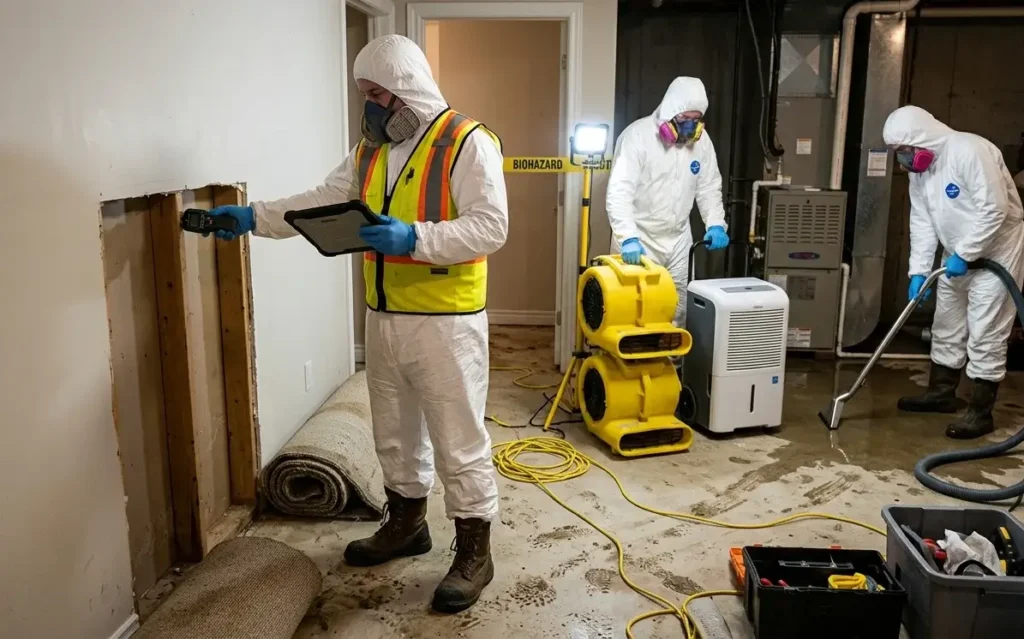
Restoring a home after a biohazard event requires more than a mop and a bucket. It requires a rigorous, scientific approach. Here is the professional sewage cleanup process you can expect when the experts arrive.
Phase 1: Emergency Response & Inspection
Within hours of your call, a response team arrives to assess the situation. They identify the source of the backup, halt the flow of water, and evaluate the extent of the property damage. This inspection determines the scope of the required water damage restoration.
Phase 2: Containment & Safety Setup
To prevent cross-contamination, technicians seal off the affected area using heavy plastic sheeting and negative air pressure systems. This step ensures that harmful bacteria and airborne pathogens do not travel into the clean areas of your home.
Phase 3: Water Extraction & Waste Removal
Using powerful, truck-mounted pumps and industrial wet vacuums, the team extracts the standing black water. Any porous materials that have absorbed the sewage, such as carpets, carpet pads, and heavily saturated drywall, must be safely removed and discarded.
Phase 4: Deep Cleaning & Disinfection
Once the bulk of the water and waste is gone, the real work begins. Technicians scrub all remaining hard surfaces using specialized, hospital-grade antimicrobial treatment. This intensive cleaning kills lingering bacteria and neutralizes biological threats.
Phase 5: Drying & Air Quality Control
Moisture is the enemy. The team installs commercial-grade dehumidification units and high-speed air movers to remove moisture from structural wood and concrete. Simultaneously, air scrubbers equipped with HEPA filtration run continuously to capture airborne contaminants, dust, and mould spores.
Phase 6: Repairs & Structural Restoration
With the area dry and sanitized, the rebuilding phase starts. This can range from replacing a few sections of drywall and baseboards to installing new flooring and repainting the room. The goal is to return the space to its pre-loss condition.
Phase 7: Final Testing & Clearance
Before packing up, professionals conduct final moisture readings and environmental tests. This clearance phase verifies that the area meets the safety standards set by the IICRC, EPA, and CDC.
Depending on the severity of the spill, this entire timeline can take anywhere from a few days to a couple of weeks to complete thoroughly.
Why DIY Sewage Cleanup Is Dangerous (And When It’s Never Safe)
We understand the instinct to roll up your sleeves and tackle a mess yourself. However, if you find yourself wondering how to clean sewage backup safely, the honest answer is that a homeowner should rarely attempt it.
The health exposure risks are simply too high. Without heavy-duty personal protective equipment, you are directly exposing your skin, eyes, and lungs to potent biohazards. Furthermore, household cleaning tools are entirely inadequate for black water cleanup. Using your everyday vacuum or a rented carpet cleaner will only cross-contaminate the machine, essentially turning it into a biohazard spreading device the next time you use it.
There are also major legal and environmental disposal concerns. Saturated carpets and sewage debris cannot just be tossed into your regular municipal garbage bin. They require specialized handling and disposal in accordance with local environmental regulations. Improper sanitation not only risks your health but can also lead to severe structural rot and a massive need for mould remediation down the road. Leave it to the pros. It is just not worth the gamble.
Sewage Backup Cleanup Cost Breakdown (2026 Guide)
Let’s talk numbers. Nobody likes a surprise bill, especially after a stressful event. The sewage backup cleanup cost varies based on several factors, but having a baseline can help you plan.
For a minor backup confined to a small bathroom with minimal standing water, you might expect costs to range between $2,000 and $4,000. However, if you are dealing with a severe, basement-wide flood involving extensive black water extraction and structural damage, the costs can quickly rise from $5,000 to well over $10,000.
Several factors influence this final number. The total square footage of the affected area is a primary driver. Additionally, the level of contamination plays a huge role. If the sewage sat for several days before discovery, the required mould remediation and demolition will increase the price. Finally, the types of materials that are damaged. Replacing custom hardwood flooring or specialized insulation will naturally cost more than replacing a small patch of standard drywall.
Does Insurance Cover Sewage Backup Cleanup?
Dealing with insurance claims is often the most confusing part of a property damage event. Will your provider cover the bill? The answer is a solid “maybe.”
Standard home insurance policies usually cover sudden and accidental water damage, like a burst clean-water pipe. However, they frequently exclude damage caused by water backing up from outside sewers or drains.
To be protected, Canadian homeowners usually need a specific “Sewer Backup Endorsement” added to their policy. This add-on specifically covers the costs of professional cleanup, structural repairs, and replacement of damaged belongings following a sewage event.
If you need to file a claim, document everything. Take photos of the damage from multiple angles before the cleanup crew removes any items. Keep all receipts and correspond with your adjuster in writing. A professional restoration company can often help you navigate this paperwork, ensuring the insurance provider understands the full scope of the required mitigation.
Also Read: DIY Mold Cleanup vs Professional Mold Remediation in Ontario
How to Prevent Future Sewage Backups
The best way to handle a sewage backup is to prevent it from happening in the first place. A little proactive maintenance can save you a massive headache later.
First, watch what you put down your drains. Never pour cooking oil or grease down the kitchen sink. As it cools, it hardens and creates massive clogs deep in your pipes. Similarly, treat your toilets with respect. Only flush toilet paper. So-called “flushable” wipes, paper towels, and feminine hygiene products do not break down fast enough and are notorious for causing blockages.
Keep an eye out for warning signs. If you notice water draining slowly across multiple sinks, or if your toilet bubbles when your washing machine drains, you likely have a developing issue in your main sewer line.
For long-term peace of mind, consider preventive upgrades. Installing a backwater valve is a smart move for Toronto homes. This device allows sewage to flow out of your home but automatically closes if water tries to push back in. Many municipalities even offer rebate programs to help offset the installation cost.
Why Property Worx Is the Trusted Choice for Sewage Cleanup
When black water invades your property, you do not have time to guess who to call. You need a fast, reliable, and expert response. Property Worx provides swift emergency dispatch, ensuring that our certified technicians arrive on-site promptly to mitigate the damage. Our teams hold rigorous IICRC certifications, meaning they are trained in the latest, scientifically proven methods for biohazard removal.
We utilize advanced extraction equipment, commercial air scrubbers, and compliant disposal methods to ensure your home is genuinely safe again. We understand how stressful these situations are, which is why we handle every job with transparency and care. When you need a trusted water damage restoration specialist Toronto residents can rely on, Property Worx delivers proven results that put your mind at ease.
Protecting Your Home: The Final Word on Sewage Mitigation
Dealing with a sewer backup is a jarring experience that disrupts your life and threatens your home’s safety. As we have explored, the dangers of Category 3 water extend far beyond a bad smell. From severe bacterial infections and toxic gases to the rapid onset of mould growth, raw sewage poses a significant biohazard that requires immediate, decisive action.
Remember, time is your biggest asset and your biggest enemy in these situations. Shutting off your utilities, keeping your family safe, and knowing when to call for professional sewage cleanup services can make all the difference in minimizing property damage. Professional restoration ensures that every drop of moisture is extracted, every surface is thoroughly disinfected, and your indoor air quality is fully restored.
Do not let a plumbing disaster jeopardize your family’s health or the structural integrity of your property. Be proactive with your home maintenance, review your insurance policies, and always have an emergency plan in place.
Request a free assessment from Property Worx today to get emergency sewage cleanup help now.
